Which bird deterrent fits sparrows on commercial roof plant rooms?


Introduction — Scenario Pain Point
House sparrows love commercial mechanical penthouses. These elevated spaces provide constant warmth from air handlers, shelter from high winds, and complete safety from raptors. When an operator walks into an HVAC plant room, dry grass and straw often spill out from electrical raceways, condenser support channels, and structural I-beams. Droppings coat control cabinets.
Finding the correct sparrow bird deterrent roof strategy demands an understanding of small bird biomechanics. Large gulls or pigeons need wide perching space, but sparrows can squeeze through an opening barely larger than three-quarters of an inch. A simple wire deterrent designed for large waterfowl won’t work here. The sparrows simply sit between the wires.
Accumulated droppings harbor secondary pests like dermestid beetles and mites, while dry nesting materials create a tangible fire risk near fan motors. Acidic uric acid eats through aluminum fins on heat exchangers. Facility operators facing strict corporate ESG audits or hygiene reviews can’t rely on toxic chemical tracking pastes or broadcast poisons. Physical exclusion hardware remains the primary method for long-term control. Selecting hardware engineered specifically for small birds stops birds from settling before the nesting cycle establishes a generational roost.
Root Cause: Why Sparrows Target Commercial Roof Plant Rooms
Why do sparrows target these roofs? Food and shelter drive the selection process. Rooftop plant rooms sit atop multi-story commercial facilities, hotels, and logistics depots, often elevated far above street-level noise. Urban and suburban commercial districts offer abundant food waste from dumpsters and outdoor break areas, yet few natural nesting cavities remain. Mechanical penthouses fill that structural void.
Industrial chillers, hot water loops, and air compressors operate continuously. These units create warm microclimates during spring and fall cold snaps. Sparrows find narrow structural niches where ambient temperatures remain well above freezing. The structural geometry of a rooftop plant room features multiple horizontal surfaces:
- Cable trays running along interior ceilings
- Structural steel flanges and beam joints
- Duct hangers suspended by threaded rods
- Gaps behind intake louvers and damper frames
- Spaces underneath commercial condenser units
House sparrows (Passer domesticus) exhibit intense site fidelity. Once a pair constructs a nest within a sheltered framing channel, their offspring imprint on that location. They return to the same structure year after year.
Standard architectural spikes rarely deter them. Sparrows often gather twigs, plastic scraps, and twine, dropping these nesting materials directly between the wide-spaced metal wires. The spikes inadvertently anchor the sparrow nest, shielding it against high winds. That defeats the hardware completely. Operators must diagnose the difference between casual day-perching on an outer parapet and entrenched nesting inside plant rooms before purchasing materials.
Step-by-Step Guide: Selecting and Installing Hardware for Roof Sparrows
Selecting the right setup requires a measured physical approach. If an operator skips initial surface preparation, adhesives peel within six months under rooftop thermal cycling. Follow this field-tested progression:
Step 1: Structural Audit and Cavity Measurement
Measure every opening along the plant room perimeter. Pay close attention to louver blades, corrugated wall rooflines, and unsealed conduit penetrations. A sparrow can enter any gap wider than 19 millimeters. Document every perching ledge under 50 millimeters wide. Check beam lips, narrow conduit runs, and damper heads.
Step 2: Surface Decontamination and Preparation
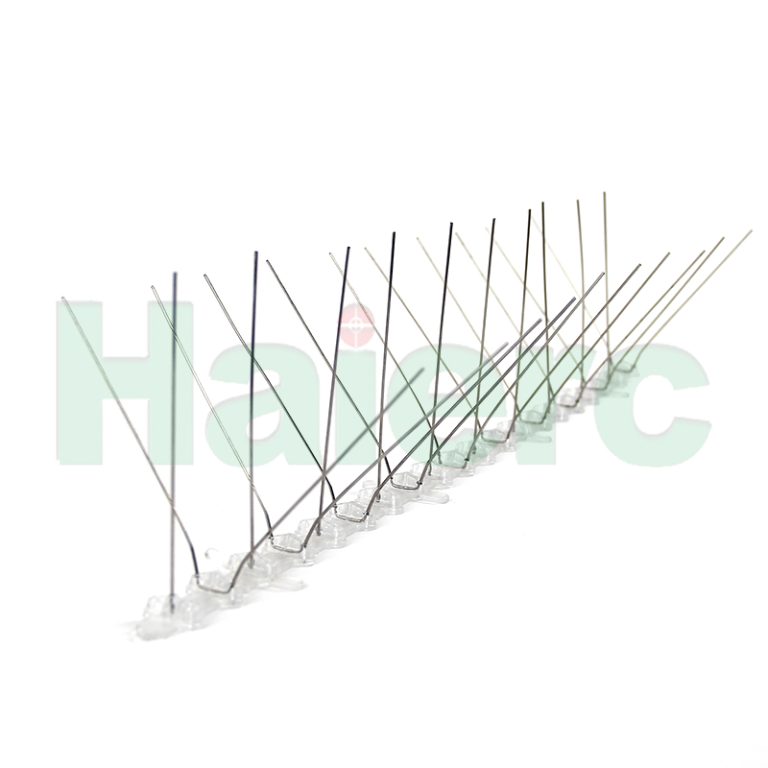
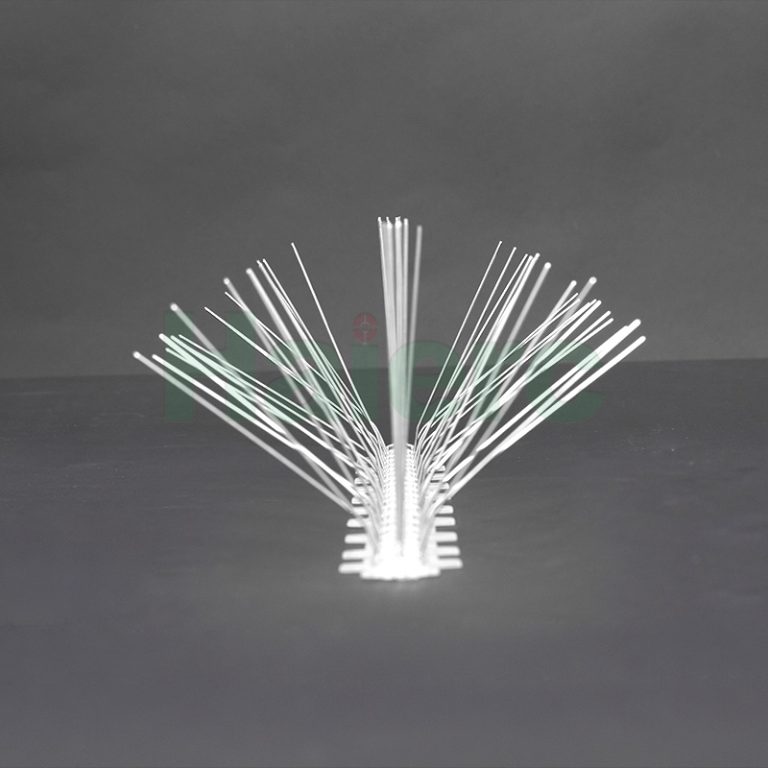
Never mount exclusion hardware onto dry bird droppings. Standard pigeon spikes have wire gaps spanning 50 to 80 millimeters, which sparrows bypass easily. Dense-wire patterns prevent them from landing between the upright posts.
- Align the spike base directly along the outer edge of the beam.
- Ensure the wire tips overhang the outer edge slightly to eliminate a front landing strip.
- Leave no gaps between consecutive strips. Sparrows will exploit a 25-millimeter gap between two spike bases to build a nest.
- Fasten using outdoor-rated polyurethane adhesive, self-tapping sheet metal screws, or UV-resistant nylon cable ties around pipes.
Step 3: Exclusion Netting for Open Bays
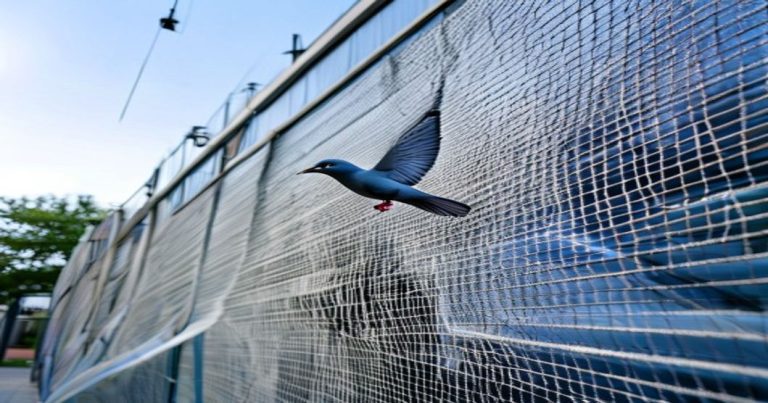
For large open bays and overhead voids, install Bird Proof Netting as a physical exclusion barrier. Keep mesh at or below 19 mm and tension the perimeter cable so sparrows cannot push under loose edges.
Step 4: Netting Enclosure for Open Overhead Bays
When a plant room features open louvered sections or exposed roof framing too vast for individual spike strips, complete enclosure via hardware netting is required. Hang a Bird Proof Netting across the perimeter access bays. Ensure the mesh size does not exceed 19 millimeters (3/4 inch). Anything larger lets sparrows push through. Pull the perimeter support cable tight, anchoring it with turnbuckles to maintain uniform tension. Fasten the netting to the steel cable using net rings every 150 millimeters.
Step 5: Secondary Deterrents for Wide Open Zones
In open rooftop areas adjacent to the plant room, sparrows stage on parapets before slipping inside. Installing visual aids like a Scare Birds Plastic Owl Decoy on roof corners breaks up staging habits when combined with physical spikes. Change the decoy’s position every two weeks. If left static, sparrows quickly habituate and perch directly on top of it.
Product Hardware Options That Fit This Job
Commercial plant rooms present mixed architectural profiles. A single deterrent rarely covers an entire building envelope. Match the hardware directly to the specific structural component:
Dense-Wire Structural Spikes
Standard pigeon spikes fail against sparrows. For wider horizontal ledges, like exterior parapet walls surrounding the mechanical room, T Type Bird Spikes provide broad surface coverage. When birds cannot touch the flat surface, they cannot stage. Look for stainless steel wires staked into clear UV-polycarbonate bases. Complete exclusion using a Bird Proof Netting closes off the entire air space. When using netting around mechanical equipment, always verify that the mesh does not choke intake airflow to chiller compressors. Maintain minimum clearances specified by HVAC equipment manufacturers.
Mistakes to Avoid & Pro Tips
Field technicians often encounter failed bird control projects. Most failures stem from simple installation oversights rather than hardware defects:
- Relying on standard pigeon spikes: Installing standard wide-spread pigeon spikes for sparrows is the most common industry mistake. Sparrows sit comfortably between the wire prongs. The prongs actually hold their nesting twigs in place against the wind.
- Leaving gaps at strip ends: Leaving a one-inch gap between spike segments to clear a bolt or conduit clamp gives sparrows an ideal nesting nook. Cut the polycarbonate bases cleanly with shears and butt them tight against obstructions.
- Ignoring overhead piping: Technicians often treat the floor or the primary equipment frame, forgetting overhead conduit runs. Sparrows perch on the high pipe, dropping feces down onto the equipment below. If installing below 40 degrees Fahrenheit, use mechanical fasteners like self-drilling screws or beam clamps rather than structural glue.
- Skipping the airflow check: When installing netting around condenser enclosures, make sure the mesh is tensioned properly. Loose netting billows in high winds, snagging in cooling fan blades or rubbing against sharp structural steel until it tears.
Physical exclusion remains the gold standard under modern Integrated Pest Management (IPM) guidelines. When implemented correctly, mechanical exclusion provides dependable protection for years without recurring chemical costs or toxic exposure risks.
Q: Why do standard bird spikes fail to deter sparrows on rooftop ledges?
A: Standard bird spikes are spaced for larger birds like pigeons and gulls. Sparrows have a small wingspan and body mass, letting them land between the wires. Larger 50-millimeter pigeon netting allows sparrows to fly straight through the openings. Netting such as a Bird Proof Netting prevents small birds from entering large roof voids.
Q: Can visual decoys like fake owls resolve a sparrow infestation in a roof plant room alone?
A: Visual deterrents like a Scare Birds Plastic Owl Decoy provide temporary disruption, but sparrows quickly habituate if the decoy remains in one spot. Visual tools should only serve as secondary deterrents alongside physical barriers like dense bird spikes or structural netting.
Q: How should bird spikes be mounted onto curved HVAC pipes and conduits?
A: Spikes with flexible UV-polycarbonate bases can bend over cylindrical pipes. Secure the base strips using outdoor UV-rated nylon zip ties or stainless steel banding clamps wrapped around the pipe, applying a bead of silicone underneath to prevent slipping.
Q: Are physical bird barriers compliant with commercial facility ESG audit standards?
A: Yes. Physical deterrents such as dense-wire spikes and non-toxic exclusion netting align directly with ESG sustainability goals. They prevent pest entry without chemical broadcast sprays, tracking powders, or hazardous operational runoff.
Conclusion
Securing commercial roof plant rooms from house sparrows requires robust exclusion hardware. Relying on chemical sprays or wide-spaced deterrents leads to recurring maintenance costs, fouled coils, and persistent audit failures. For larger roof openings, complete exclusion netting closes off open spaces reliably.
Contact Haierc at https://www.haierc.com to request hardware specifications, layout advice for your next commercial facility project.
About Haierc PCO
Haierc PCO manufactures physical pest-control hardware in Tianjin, China, with 18+ years of experience and 1000+ items in production. Haierc holds ISO9001; products are offered to CE, REACH and RoHS requirements where applicable; the factory is BSCI and SEDEX audited. Commercial terms: MOQ from 100 pcs; OEM / private label from 500 pcs. Contact: info@haierc.com | +86 18602234188 | https://www.haierc.com