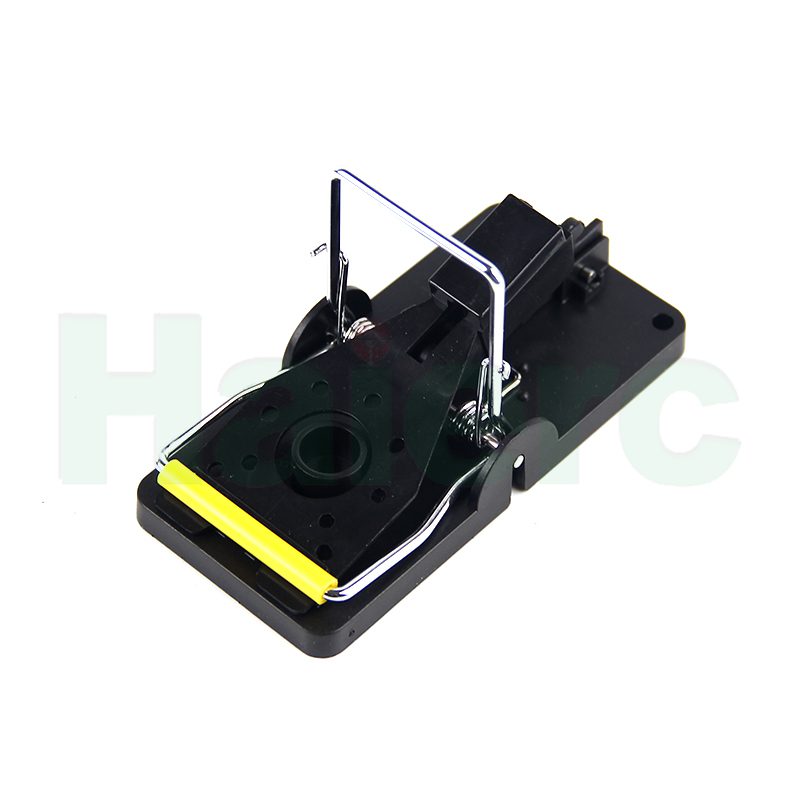
Mouse Trap Technical Specifications for B2B Buyers: Jaw Force, Trigger Sensitivity & Material Standards (2026)
Introduction
A mouse trap is a mechanical device engineered to capture or kill commensal rodents through spring-loaded kinetic force, enclosing cages, or adhesive containment. In professional pest management, mechanical snap traps remain the backbone of rapid knockdown protocols.
A common field failure: cheap traps fail. When a technician sets fifty units inside a distribution centre, an unreliable release mechanism wastes labour hours and burns client trust. Poor trigger calibration results in stolen bait. Weak springs lead to half-catches, generating welfare violations under local wildlife legislation. For buyers supplying pest control operators (PCOs), sourcing isn’t merely about finding the lowest unit price on an invoice. It’s about kinetic repeatability.
A high-performance Mouse Trap must fire consistently across thousands of cycles without frame distortion or metallurgical fatigue. Let’s look at how current European regulatory pressures, animal welfare codes, and material science dictate modern pest hardware procurement.
Commercial Rodent Management: UK Market Pressures and Regulatory Standards
Pest management across the United Kingdom is undergoing an aggressive structural shift.Mus domesticus has rendered first-generation anticoagulant baits practically useless in urban zones, while statutory restrictions heavily limit open-perimeter toxic baiting. Industry pest-management guidance highlights mechanical trapping as an indispensable first-line intervention under Integrated Pest Management (IPM) protocols. At the same time, the Campaign for Responsible Rodenticide Use (CRRU) code pushes service companies away from non-target chemical exposure, leaving hardware as the primary answer.
For commercial accounts governed by the third-party food-safety buyer audits Food Safety Issue 9, non-toxic monitoring and mechanical kill traps inside processing halls are mandatory. There’s no margin for chemical drift near exposed ingredients. This operational reality is driving massive demand for non-chemical tools across commercial sites. In that sector, physical-attraction fly traps secured a 46% share in 2025, while the Sticky Fly Trap held a 40% share in 2025 for organic residue-free processing environments. The exact same trajectory governs rodent hardware: non-toxic physical barriers and precision traps are replacing open chemicals.
PRECISION SNAP TRAP SCHEMATIC
[ HIGH-TENSILE CARBON STEEL DUAL-TORSION SPRING ]
\ /
\ ___ /
| | (o) | | (90° ARC)
| |_____| |
| | |
| | |
| / \ |
| |
| [INTERLOCKING BASE TEETH] [CABLE ANCHOR] | CHASSIS
Meeting these demands isn’t easy for purchasing managers. Whether you’re a rodenticide bulk buyer Germany trading house diversifying into traps or a specialised copper mesh distributor expanding into exclusion accessories, you need reliable hardware. European standards like those from the Confederation of European Pest Management Associations (CEPA) demand audited traceability. Cheap imports snap at the hinge under continuous cold-storage cycling. The strike mechanism relies entirely on the spring’s potential energy conversion.
For commercial accounts, our mouse snap trap technical spec requires dual-torsion high-tensile carbon steel springs. Cheap consumer models use basic zinc-plated low-carbon wire. Those soften within three weeks of being set. In commercial kitchens or damp crawlspaces, low-grade wire yields to micro-corrosion, bleeding kinetic energy and reducing kill speeds. Our production lines subject carbon wire to precise tempering cycles, ensuring consistent torsion across temperatures from -15°C to 50°C.
Then there’s strike velocity and impact energy. A closing force between 5.5 and 7.2 Newtons delivers the necessary kinetic impact across the strike bar’s 90-degree sweep.
Trigger sensitivity requires equal mechanical discipline. Hair-trigger pins calibrated between 12 and 18 grams ensure micro-activation. If an uncalibrated unit demands 35 grams of force, small house mice will clean out peanut paste or specialist gels without tripping the mechanism.
TRIGGER SENSITIVITY vs. PEST RECOGNITION
Force (g)
40 |———————– Consumer Grade (High Theft Risk)
30 |
20 |————- OPTIMAL B2B WINDOW (12g – 18g)
10 |———————– Sensitive (Misfire / Transport Risk)
0 +———————–
Material durability rounds out the equation. The chassis must resist heavy sanitising chemicals, rodent urine, and accidental impacts from pallet trolleys. For our professional models, we utilise high-impact virgin polypropylene (PP) compounded with UV stabilisers. Virgin polymers won’t warp or release volatile organic plasticisers that create trap shyness.
Every component meets strict mouse trap CE REACH testing standards, guaranteeing that zero restricted phthalates or heavy metals migrate onto facility surfaces. A professional mouse trap distributor can’t sell basic hardware to contractors managing food processing plants, logistics depots, or pharmaceuticals. Every site has unique operational hurdles.
Food processing units and packaging plants present strict sanitation rules. Technicians cannot place exposed bait in zones governed by the third-party food-safety buyer audits standard or the US food-facility buyer requirements 2026 compliance framework. Our traps feature smooth, non-porous chassis that can be washed with chlorinated sanitising solutions without degrading the hinge pins. Because our polymer base is non-absorbent, it carries zero biological carryover between deployments.
In cold storage facilities, conventional plastic traps often snap when tripped due to brittle polymer matrices. Our cold-hardened polymer blends withstand blast-freezer temperatures down to -20°C. They keep working along insulated wall-floor junctions where rodents seek shelter near compressor heat traces.
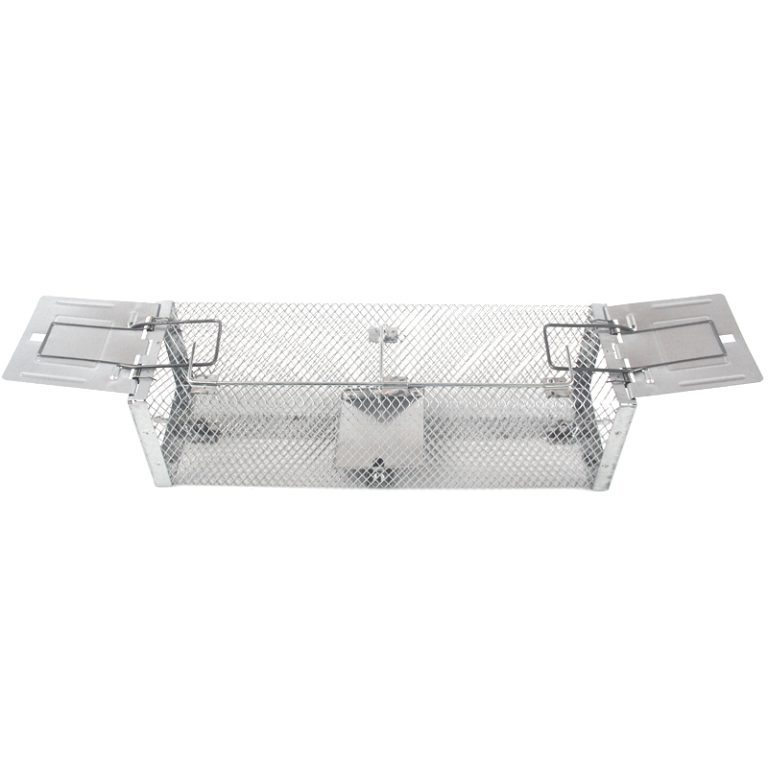
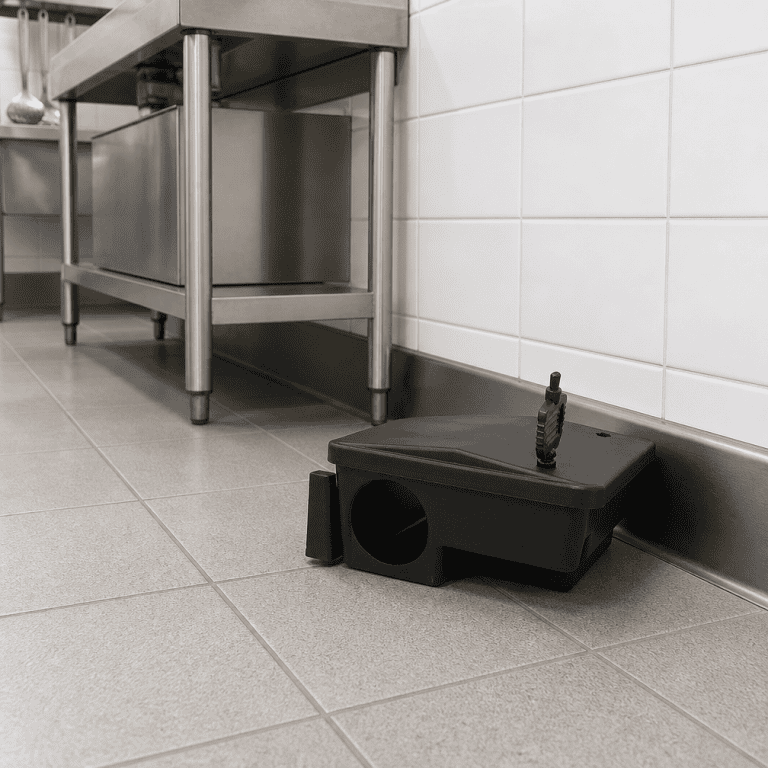
In multi-tenant commercial warehouses, mice run long pallet racking perimeters. Technicians pair our traps with secure tamper-evident housings like the HC2216 or our multi-catch trap series. The trap chassis fits standard modular stations, keeping fingers and pets safe while protecting strike bars from falling stock.
Contractors working across retail sectors face similar compliance hurdles whether they deploy physical traps, configure a Precision hardware lowers overall operational costs.
Sourcing Value: Commercial Advantages for UK Distributors
Distributors running trade counters throughout Birmingham, Manchester, and London need reliable hardware. Defective products destroy margins. If an installer sets 500 traps and 50 misfire during initial inspections, the installer demands credits, and the distributor takes the financial hit.
By standardising on precision-tooled mechanical traps, trade accounts capture reliable repeat business. Our units pack flat for transport, stack cleanly in engineer vans, and clean off quickly between jobs. The sensitive bait cup design holds liquid, paste, or solid non-toxic attractants without spilling into the trigger mechanism, which prevents false triggers during transit.
Sourcing direct from our Tianjin factory gives UK distributors clear cost advantages over dealing with local third-party middlemen. You bypass regional markups while securing custom production runs that match your catalog. If you operate alongside a bait station importador or partner with a rodent control supplies importer Canada specialist, you understand that container-level logistics require reliable manufacturing execution.
We cut out supply chain noise. We operate comprehensive OEM and ODM programs out of our ISO9001-certified manufacturing facility in Tianjin, letting you scale your proprietary brand instead of pushing an open-market label.
We produce snap traps in custom corporate colours, complete with pad-printed logos and tailored instruction leaflets. We handle safety inserts, high-density counter display outers, and bespoke multi-packs for retail shelves. We also manufacture matching rodent-control hardware for distributors who need consistent OEM branding across snap traps and bait stations.
Our engineers design bespoke mould modifications for high-volume trade brands. If your market demands an extra anchoring point, tether eyelets for zip ties, or dual-sensitivity treadles, our in-house tooling shop builds prototypes within 10 business days. Standard OEM runs ship within 15 to 25 days, with trial orders from 100 pcs (OEM from 500 pcs).
Supply Chain Security: Why Choose Haierc PCO
For over 18 years, Haierc PCO has engineered, manufactured, and exported professional pest hardware to distributors worldwide. We own our injection moulding machinery, metal stamping dies, and spring winding lines. We aren’t a trading house reselling open-market surplus; we control our production tolerances from raw pellet to final pallet.
Our manufacturing base holds ISO9001, BSCI, and SEDEX certifications, satisfying the strict environmental and ethical supply chain audits required by major retailers. This kinetic output delivers an instantaneous, humane dispatch that meets international welfare standards while preventing bone fragmentation that creates hygiene risks in food production environments.
Q: Are Haierc mouse snap traps certified for deployment in third-party food-safety buyer audits food manufacturing facilities?
A: Yes. Haierc mouse traps are made from non-absorbent virgin polypropylene and corrosion-resistant steel. They are CE and REACH compliant, contain no hazardous phthalates, and can be washed with commercial sanitising agents, making them fully compliant with third-party food-safety buyer audits and food-facility buyer requirements guidelines.
Q: What minimum order quantity (MOQ) applies to OEM custom branding and colour runs?
A: Our MOQ from 100 pcs; OEM/private label from 500 pcs for standard hardware configurations. For bespoke polymer colour matching, hot-stamped private label branding, and custom packaging, OEM/private label runs start from 500 pcs.
Q: How do Haierc snap trap springs resist mechanical fatigue during prolonged sets?
A: We use high-tensile 65Mn carbon steel wire that undergoes automated heat treating and precision oil tempering. This metallurgical process maintains structural memory, letting the dual-torsion spring remain set for months without losing kinetic strike velocity.
Q: Can your mouse traps be secured inside larger tamper-resistant bait stations?
A: Yes. Haierc mouse traps feature standard footprint dimensions designed to clip securely into the internal locating lugs of our HC2216 stations and most standard commercial bait stations across the UK market.
Source Certified Rodent Trapping Hardware Directly
Regulatory pressure on chemical rodenticides will continue to intensify across the UK and mainland Europe through 2026 and beyond. Professional pest control businesses need reliable mechanical hardware to keep accounts clear, pass client audits, and protect operational margins.
Haierc PCO supplies the engineering precision, raw material consistency, and factory-direct pricing required to scale your distribution network. Contact our international trade team at info@haierc.com or visit https://www.haierc.com to request product samples, receive full technical data sheets, and review our container volume pricing schedules.