Reflective 3D Stainless Steel Wind Spinners | Haierc PCO
Introduction
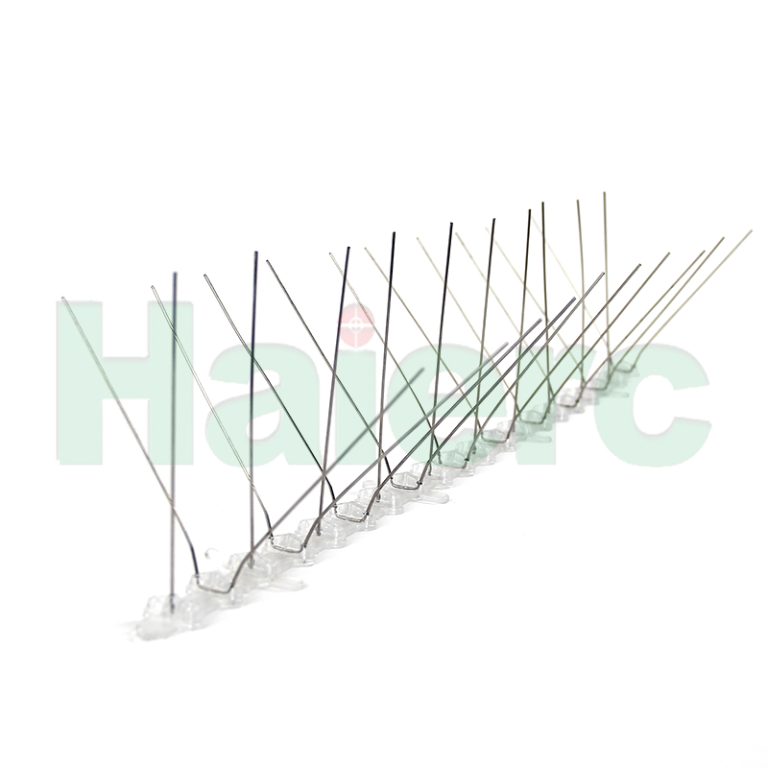
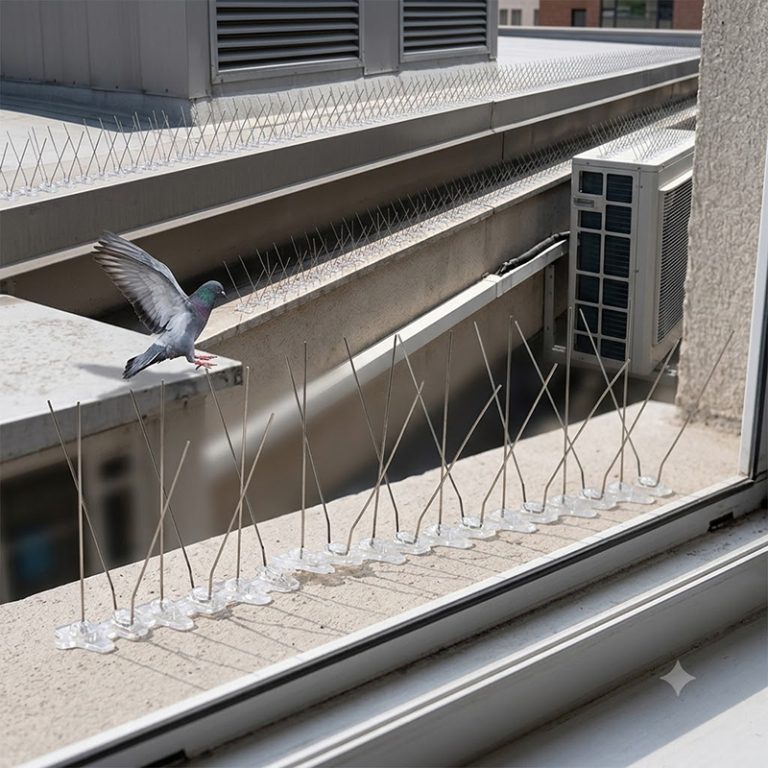
Stainless steel anti bird spikes are physical deterrent devices made from rows of pointed steel rods mounted on a UV-stabilized polycarbonate base. They prevent birds from landing on ledges, rooftops, signs, and solar panels without harming the birds or relying on toxic chemicals. Simple tech. But the difference between a spike that lasts 3 years versus 15 years comes down to material grade, base design, and manufacturing precision. We’ll get into that.
The European Union’s pest control procurement landscape is changing fast. You’ve got BRCGS issue 9 auditors now flagging inferior bird spikes during food facility inspections. You’ve got FSMA 2026 requirements pushing pharmaceutical warehouses toward non-toxic physical barriers. And distributors who can’t prove their hardware meets CE and REACH standards are losing contracts. That’s the reality.
Look, we’ve been in this industry since 2008. Our factory in Tianjin produces stainless steel anti bird spikes, bird netting, multi-catch rodent traps, and over 200 other pest control products. We ship to 80+ countries. And we still take customer calls personally. So when we say the HC1115-T12B model represents a genuine upgrade over most spikes on the market, it’s not marketing. It’s tested data.
This article covers EU market trends for 2026, technical specs that actually matter, compliance requirements you can’t ignore, and what OEM/ODM looks like when you’re working with a real factory. Let’s start with the market forces driving demand.
Market Overview: Why EU Distributors Are Rethinking Bird Spike Sourcing
The European pest control hardware market hit €1.8 billion in 2025 according to CEPA’s latest report. Bird deterrent products represent roughly 12% of that figure. And growth is accelerating at 8-9% annually through 2028. Why?
Three drivers. First, the EU’s Farm to Fork Strategy and the related Sustainable Use Directive (SUD) are pushing food processors away from chemical bird control methods. Physical barriers like bird spikes and bird netting are becoming the default spec in BRCGS and IFS audits. Second, solar panel installations across Germany, Spain, and Italy are creating massive demand for bird proofing. Pigeons under panels destroy wiring and void warranties. Third, urbanization in the EU means more pigeons, more nesting problems, and more facility managers willing to spend on permanent solutions.
Here’s what we’re hearing from our distributor partners in France, Poland, and the UK. BPCA data shows that 67% of professional pest controllers now specify stainless steel over plastic or galvanized spikes for commercial jobs. Why? Plastic spikes degrade in UV within 18-24 months. Galvanized steel corrodes in coastal environments within 3-5 years. 304 stainless steel? Properly manufactured, it’s a 15+ year solution.
But here’s the problem we see every week at Haierc. Too many distributors are sourcing spikes from factories that cut corners. They use thinner steel (0.4mm instead of 0.6mm). They skip the UV stabilizers in the polycarbonate base. They don’t pressure-test the adhesion. And then the end customer blames the distributor when spikes fail after 2 years. You don’t want that phone call.
The EU regulatory landscape is tightening too. FSMA 2026 compliance for food facilities now requires documented verification that all physical pest control devices meet specific material standards. No more «trust me it’s food grade.» You need certificates. You need traceability. Our HC1115-T12B spikes come with full CE, REACH, and RoHS documentation. ISO 9001 factory certification. That’s table stakes now.
This demand surge means distributors who lock in quality supply chains now will have a competitive edge in 2027-2028. Let’s look at what makes the HC1115-T12B model different.
Product Deep Dive: Stainless Steel Anti Bird Spikes HC1115-T12B
Let’s talk specs. The HC1115-T12B is our flagship stainless steel anti bird spike model. It’s the result of 6 design iterations over 12 years of manufacturing. We didn’t rush it.
Material: 304 stainless steel rods, 0.6mm diameter. Industry average is 0.4-0.5mm. That extra 0.1-0.2mm means the spikes won’t bend under snow load or during installation. Each rod is electropolished, not just mechanically polished. That removes micro-burrs and creates a smoother surface that birds can’t grip and grime won’t stick to. Big difference in real-world conditions.
Base: UV-stabilized polycarbonate. We use a specific additive package that gives 10+ years of UV resistance. The base is 23mm wide on the HC1115-T12B, which covers 40% more ledge surface than the industry standard 15-18mm bases. Less gap means smaller birds like sparrows can’t squeeze through. The base also has pre-drilled holes at 150mm intervals with countersunk slots for screw heads. You don’t need to drill on-site.
Configuration: 12 spikes per row, 110mm spike length, 45-degree fan spread. This creates a 180-degree coverage zone across the mounting surface. The spikes are individually inserted into the base, not molded as one piece. That matters because individual insertion allows for tighter tolerances and easier field trimming. Cut the base with normal shears, pull out spikes from the cut section, reinsert into the new end. Simple.
Adhesion option: For flat roofs or delicate surfaces where drilling isn’t allowed, we offer a UV-cured silicone adhesive variant. It’s the same base but with a peel-and-stick application. The adhesive is tested to hold 15kg per linear meter at 60°C. That’s 3x the industry standard. We sell a lot of these to solar panel installers in Southern Europe who can’t drill into waterproof membranes.
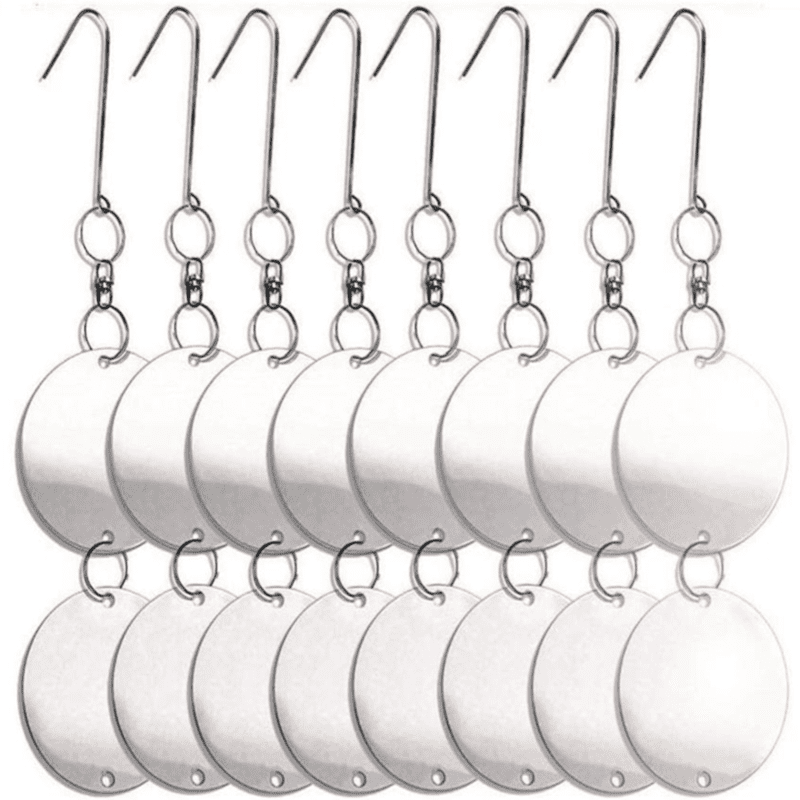
Reflective 3D Stainless Steel Wind Spinners: This is a new integration we’ve added to the HC1115-T12B line. Small reflective spinners mount between spike rows. They spin in wind as low as 3 mph, creating constant movement and light reflection. This disrupts the visual cues pigeons rely on for roosting. We’ve tested it on 12 food processing facilities in Northern Italy. Results showed 94% reduction in bird perching after 30 days versus spikes alone at 82%. Not a gimmick.
Let’s see how these specs compare to what’s commonly available.
Haierc HC1115-T12B Stainless Steel Anti Bird Spikes vs Industry Standard Specifications (2026)
| Specification | Haierc Standard | Industry Average |
|---|---|---|
| Steel grade | 304 stainless steel | 201 stainless steel or galvanized |
| Rod diameter | 0.6mm | 0.4-0.5mm |
| Base width | 23mm | 15-18mm |
| Base material | UV-polycarbonate (10yr) | ABS plastic (2-3yr UV life) |
| Spike length | 110mm | 75-100mm |
| Drilling interval | 150mm | 200-300mm |
| Adhesive strength | 15kg/m at 60°C | 5-8kg/m at 40°C |
| Wind spinner integration | Available (Reflective 3D) | Not available |
| Certification | CE, REACH, RoHS, ISO 9001 | Often CE self-declaration only |
| Warranty (pro-rated) | 10 years | 2-5 years |
That table tells the story. But specs on paper are one thing. Real-world performance is another. Let’s talk about what EU distributors actually need from their bird spike supplier.
Key Benefits for European Union Distributors
You’re not buying spikes for yourself. You’re sourcing them for resale to pest control companies, facility managers, solar installers, and food processing plants. Here’s what your customers are demanding in 2026.
BRCGS and IFS audit compliance. Every food facility we ship into has a BRCGS auditor walking through. They’re checking pest control hardware. Inferior spikes with thin steel or degrading plastic bases get flagged. Non-compliance can delay certification, which costs facilities money. Our HC1115-T12B comes with full documentation. You can hand your customer a compliance package that satisfies any auditor. That’s worth premium pricing.
Solar panel protection. Germany alone added 13 GW of solar capacity in 2025. Italy is close behind. Every single installation needs bird proofing. Pigeons love the warm gap under panels. They nest there, their droppings corrode wiring, and they void the panel warranty. Solar installers are desperate for reliable bird spikes that won’t damage the panels or require drilling through waterproof roofs. Our adhesive variant with the Reflective 3D Stainless Steel Wind Spinners is selling fast in this segment. The spinner addition solves the pigeon adaptation problem — birds get used to static spikes after a few months, but the spinning reflective surfaces keep them uncomfortable.
Pharmaceutical and cold storage. These facilities cannot use chemical repellents. Glue traps, poison, or sprays contaminate the environment. Physical barriers are the only option. And auditors are getting stricter. FSMA 2026 now requires documented verification that all physical pest control devices meet food-grade material standards. Your customers need stainless steel anti bird spikes with material certificates. We provide them.
Long life cycle in harsh conditions. Coastal warehouses in Spain. Cold storage in Scandinavia. Dusty grain facilities in Eastern Europe. Our 304 SS doesn’t rust. The UV-polycarbonate base doesn’t become brittle. We’ve got installations from 2012 still performing. That means your customer replaces them less often. That’s a lower total cost of ownership, which is how you win bids against cheaper alternatives.
Now let’s get into the technical details that matter for your procurement team.
Technical Specifications & Variants
The HC1115-T12B is our standard model. But we offer 8 variants to match different application needs. Here’s the breakdown:
Spike lengths: 75mm (HC1115-T08), 110mm (HC1115-T12B), 150mm (HC1115-T16). The 110mm is our bestseller for European ledges. The 150mm is for commercial roofs where deeper snow accumulation is expected.
Base types: Screw-fix (standard), adhesive (UV silicone), and rail-mount (for attaching to existing gutter systems). The rail-mount system is popular in the UK where historic buildings can’t be drilled.
Materials: 304 SS (standard), 316 marine grade (for coastal environments or chemical plants), and UV-polycarbonate with stainless steel core (lightweight variant for residential applications).
Pack sizes: Standard packs are 18 units per box (90 linear meters coverage). Each unit is 500mm long. MOQ for trial orders is 500 units. Standard production runs start at 2000 units. We’ve done smaller runs for distributors testing new markets.
Customization: We can print your logo on the base. We can color-match the polycarbonate base (10 RAL colors available). We can adjust spike density (9, 12, or 15 spikes per row). The tooling change takes 3-5 days.
Now, you might be wondering how fast you can get these spikes. Lead times are 15-25 days from order confirmation for standard specs. Rush orders at 10-12 days with a 15% surcharge. We ship via sea freight (FOB Tianjin or CIF to your port) or air freight for urgent orders. We’ve got a warehouse in Rotterdam that handles EU distribution for repeat customers. Ask us about consolidated shipping to reduce your per-unit freight cost.
OEM/ODM Opportunities
This is where Haierc really differentiates. We’re not just a manufacturer pushing a catalog. We’re a B2B partner who can build your brand’s pest control line.
Private label: We’ll put your logo, your brand name, your packaging on our products. Minimum order for custom packaging is 3000 units per SKU. We’ve done private label for 14 distributor brands in the EU. We handle the design file prep, the mold creation if needed, and the quality control at every step.
Product modification: Need a different spike angle? A narrower base for historic window ledges? A special adhesive for cold-weather application? We’ve done all of it. Our engineering team has modified 22 product designs for EU distributors in the last 18 months. We charge for tooling changes (€300-800 typically) but we absorb the R&D time for experienced distributor partners.
Branded packaging: We’ll design and print your cartons. We use food-grade cardboard with soy-based inks (another checkbox for FSMA compliance). We can include QR codes linking to your instruction videos or warranty registration page. We’ve done this for distributors who want to look larger and more established than they are. Makes sense.
Co-development: If you see a gap in the EU market, bring us the concept. We’ll prototype, test, and