Which snake tongs specs matter for utility and energy sites?
Introduction — Scenario Pain Point
High-voltage substations, rural switchgear yards, and utility-scale solar arrays attract cold-blooded wildlife every single spring. Warm concrete pads, shaded inverter housings, and gravel perimeters draw pit vipers and non-venomous racers searching for rodents or thermal regulation. When a field technician opens an electrical cabinet during routine maintenance and meets a western diamondback rattlesnake, normal operations stop immediately.
Work halts. Safety protocols kick in. Crews lose hours waiting for an on-call animal handler to arrive at a remote substation thirty miles outside town.
Equipping service trucks with reliable snake tongs utility sites can trust prevents unnecessary project delays and keeps technicians out of strike range. Selecting hardware for industrial utility sites differs from buying a hobbyist reptile tool for a home terrarium. Utility hardware gets placed in truck beds, dropped on crushed limestone, and handled by field techs wearing heavy protective gear. If the tool flexes during a relocation or slips off a struggling reptile, personal injury and costly downtime follow. Understanding the exact mechanical specifications of industrial snake tongs prevents equipment failure when technicians need positive mechanical control the most.
Root Cause: Why Utility Yards and Energy Fields Attract Snakes
Substations, solar inverter stations, and pump houses don’t just accidentally house reptiles. They are engineered environments that inadvertently supply biological requirements snakes seek. Understanding these site conditions helps safety directors deploy the right physical tools before field crews run into trouble.
First, crushed aggregate and rip-rap stone perimeters provide deep, thermal-stable voids. In hot desert basins, surface temperatures easily exceed 110 degrees Fahrenheit. Snakes seek cool shelter inside below-grade cable trenches, conduit runs, and transformer vaults. In contrast, during early morning shifts in late autumn, switchgear cabinets emit steady residual heat from active transformers. Rattlesnakes, copperheads, and bullsnakes crawl through unsealed conduit punch-outs or under rubber cabinet sweeps to rest near warm busbars.
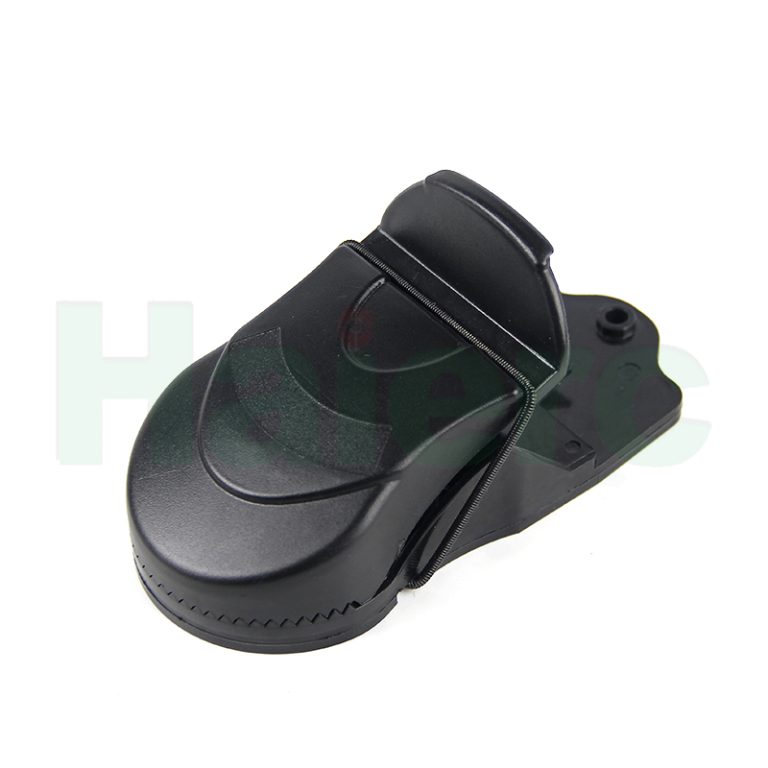
Second, utility yards frequently host rodent populations. Field mice and ground squirrels nest beneath ground-mounted solar racking, chewing on low-voltage direct-current wiring. When rodents move into an electrical enclosure, predatory snakes follow their scent trails directly into the electrical infrastructure. If a facility team relies solely on general rodent management like standard bait boxes or perimeter barriers, snakes will still venture across fence lines to hunt active burrows. While some sites deploy an Easy Mole/Vole/Gopher Trap (HC2401) to reduce burrowing pests around perimeter footings, the snakes drawn by past infestations often stay.
Finally, geographical isolation compounds the risk. A maintenance crew working a remote solar farm can easily be hours away from the nearest emergency medical trauma facility stocked with antivenom. Standard corporate safety policies mandate non-lethal, non-contact relocation when dangerous wildlife obstructs electrical equipment. Technicians must clear snakes from access panels safely without damaging delicate high-voltage lines, fiber optic runs, or sensitive supervisory control and data acquisition (SCADA) relays.
Critical Mechanical Specs for Industrial Snake Tongs
A basic pet-store reptile grabber bends under the weight of an eight-pound eastern diamondback. Industrial crews require physical hardware engineered for durability, torque transmission, and safe standoff distances.
Standoff Length and Structural Deflection
Safe physical distance directly dictates reaction time during venomous reptile encounters. When selecting snake tongs utility sites rely on, ample separation between operators and defensive snakes is critical. Short capture tools built for domestic settings leave field personnel within striking range, increasing operational hazards around remote infrastructure.
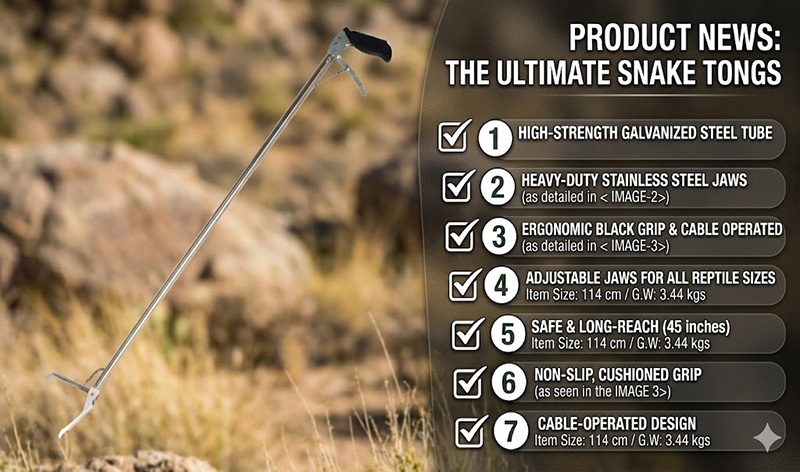
For field technicians, a minimum length of 40 inches is standard, with 48 inches to 52 inches preferred for general field clearance. However, fixed long tools create transportation headaches in service pickups packed with ladders, hot sticks, and toolboxes. This is why telescopic designs dominate commercial utility fleets. The hardware must maintain structural stiffness when extended. Thin-walled aluminum tubes bow under lateral pressure, causing the jaw alignment to twist off-center. Thick-walled aluminum construction minimizes flex while remaining light enough to maneuver through tight enclosure frames.
Jaw Profile and Grip Pressure Control
Utility technicians are not professional herpetologists. In high-stress situations, an untrained operator’s natural instinct is to squeeze the handgrip with excessive force. Traditional narrow, scissor-style metal pincers exert pressure over a tiny surface area, often injuring the snake’s spine or cracking ribs. A severely injured snake thrashes violently, increasing strike risks and complicating handling.
Industrial utility tongs utilize wide, contoured cast aluminum jaws. The lower jaw features a broad, flat or gently curved paddle, while the upper jaw works against tensioned internal cables to distribute clamping force along several inches of the reptile’s body. Smooth or rounded jaw edges prevent skin lacerations. The mechanical advantage ratio allows firm restraint without crushing skeletal structures.
Internal Cable Drive vs. External Linkages
Cheaper commercial tongs rely on external control rods or exposed pull-strings. In an industrial energy environment, exposed linkages are an immediate failure point. They snag on structural racking, catch on high-voltage conduit, or bend when tossed against steel unistrut inside a service truck.
Industrial-grade snake tongs house their drive mechanisms entirely within the aluminum shaft. High-tensile stainless steel braided aircraft cables route internally from the pistol trigger down to the jaw pivot. The cable remains protected against grit, weather, UV degradation, and physical snagging. When maintenance technicians work in blowing dust near open solar fields, sealed internal cable runs prevent particulate binding that could lock jaws open during an extraction.
Step-by-Step Guide: How to Clear and Relocate Snakes on Energy Sites
Managing snake encounters on critical utility sites requires a disciplined, repeatable operational procedure. Field staff should never improvise with shovels, wooden sticks, or loose wire.
Step 1: Pre-Work Perimeter and Enclosure Inspection
Before opening any pad-mount transformer, pull-box, or combiner cabinet, technicians should scan the immediate work zone.
- Visual scan: Check shaded concrete ledges, foundation skirts, and conduit entry sleeves.
- Enclosure tap: Rap firmly on the metal cabinet door with a fiberglass tool or gloved knuckle before turning the handle. The vibration alerts any resting snake, prompting warning rattles or defensive movement before hands enter the enclosure.
- Thermal imaging check: If crews carry thermal diagnostic cameras for electrical inspections, a quick sweep of the cabinet interior often highlights cold-blooded silhouettes resting against warm internal components.
Step 2: Establish the Safety Zone
If a snake is spotted inside or adjacent to working gear:
- Stop work immediately and move all personnel back to maintain a safe perimeter.
- Confirm the exact position of the animal without reaching blindly behind electrical panels or conduit bundles.
- Retrieve dedicated handling tongs from the vehicle bracket, confirming that the mechanical mechanism operates smoothly.
- Position the containment vessel on level ground within several paces of the work area, leaving the lid unlatched for secure transfer.
Step 3: Mechanical Engagement and Lift Technique
Safe handling depends on precise grip positioning. Grabbing a snake by the tail tip causes the body to whip around toward the shaft, while grabbing directly behind the head risks crushing the skull or prompting defensive contortions.
- Aim for the anterior third of the body. Grasping the snake approximately one-third of the way back from the head provides control over its striking leverage while supporting its internal organs.
- Apply steady, moderate grip pressure. Squeeze the trigger until the jaws firmly seat against the snake’s scales without over-crushing.
- Lift the reptile smoothly off the substrate. Keep the tongs angled downward at roughly 45 degrees, maintaining the animal below knee height and away from your torso.
- Use a two-handed grip on extended telescopic tongs. One hand operates the trigger grip; the supporting hand guides the mid-shaft to reduce wobble.
Step 4: Containment and Site Transfer
Move deliberately toward the containment drum. Avoid fast, jerky steps that cause the snake to flail.
- Lower the snake directly into the container.
- Release trigger pressure smoothly to allow the snake’s entire body to settle inside the bottom of the drum.
- Secure the lid immediately using a screw-top or locking ring system. Never use open buckets or unsealed cardboard boxes.
- Transport the animal to the site boundary or coordinate with authorized wildlife authorities for release into natural brush habitat away from high-traffic access roads.
Selecting the Right Tools for Remote Energy Sites
Fleet managers and safety coordinators must supply field teams with robust physical hardware designed specifically for challenging commercial environments. Remote energy infrastructure requires dependable handling gear to keep field crews safe from venomous reptiles. Deploying snake tongs utility sites require helps maintain safe standoff distances while collapsing into a profile that fits inside utility vehicle storage compartments.
Managing perimeter pest pressures across remote energy infrastructure requires dependable handling tools and targeted mechanical hardware. In perimeter storage yards and substation boundaries, technicians deploy the Easy Mole/Vole/Gopher Trap (HC2403) to control burrowing pests that destabilize footings and attract foraging reptiles. Using durable, targeted physical hardware provides non-chemical containment around sensitive ground installations without interfering with delicate electrical equipment.
Critical Mistakes to Avoid in High-Voltage Environments
Handling dangerous reptiles around energized equipment carries extreme risks. Avoid these common field mistakes during procurement and operational deployment.
1. Using Metal Tongs Inside Live High-Voltage Cabinets
Aluminum is conductive. Never insert an aluminum snake tong into an energized medium-voltage or high-voltage cabinet. If a snake is intertwined with active electrical busbars or energized terminals, the equipment must be de-energized and tagged out following standard Lockout/Tagout (LOTO) rules before any retrieval tool touches the enclosure interior. Alternatively, an insulated dielectric snake hook must be utilized if de-energization is impossible during an emergency. Ensure technicians understand that mechanical snake tongs are meant for ground clearance, cabinet thresholds, and cable trench interiors, not live conductor contact.
2. Procuring Flimsy Hobby-Grade Hardware
Purchasing lightweight consumer-grade tongs to cut procurement costs regularly leads to field failures. Hobbyist tools often use soft sheet-metal jaws that bend when lifting heavy snakes, or thin wire lines that snap under tension. When a cable snaps mid-operation, the jaws spring open, dropping a defensive snake at the technician’s feet. Invest in thick-walled aluminium construction with commercial-grade cable linkages capable of sustaining repeated field deployment.
3. Neglecting Tool Maintenance and Field Hygiene
Snake tongs live rough lives in the back of utility trucks. They get coated in road grit, grease, and rain. Over time, dirt works into the jaw hinge and trigger housing.
- Monthly cleaning: Blow out the jaw assembly with compressed air and lubricate pivot pins with a light, non-gumming silicone spray.
- Cable tension check: Periodically inspect internal cable tension. If the trigger exhibits slack before the jaws begin moving, adjust the cable barrel screw to restore crisp, responsive jaw action.
- Storage: Secure tongs in vehicle mounting brackets rather than leaving them loose beneath heavy hydraulic crimpers or ground chains.
Comprehensive Facility Wildlife Exclusion: Beyond the Tongs
While snake tongs provide reactive safety for technicians, proactive exclusion keeps utility enclosures free from wildlife disruptions. Integrating snake management into a broader Integrated Pest Management (IPM) strategy preserves facility reliability.
Sealing Penetrations and Cable Runways
Snakes can pass through gaps as small as one-quarter inch. Utility construction crews must seal every cabinet penetration with durable materials:
- Conduit sweeps: Pack unused conduit openings with stainless steel mesh and seal with expanding closed-cell polyurethane foam or elastomeric fire-rated mastics.
- Cabinet door gaskets: Replace brittle, cracked door sweeps on all outdoor control cabinets. Neoprene gaskets must seal firmly against the concrete plinth.
- Trench covers: Install tight-fitting aluminum or composite trench covers over subterranean cable paths. Inspect concrete trench joints for soil washouts that leave gaps into surrounding gravel.
Managing Attractant Vectors
Snakes do not linger where there is no food or shelter. Utility operators should maintain clear vegetation buffers around all switchyards and solar inverter pads. Keeping grass mowed low prevents tall weeds from providing reptiles with cover to move undetected. Furthermore, keeping control rooms and inverter stations free of food waste discourages pests. Technicians should inspect interior areas to ensure insect or rodent activity does not create a food chain that pulls predators indoors. When exterior burrowing pests create tunnel networks beneath ground mounts, targeted mechanical traps help reduce the prey base before venomous species establish active hunting routines.
Frequently Asked Questions
Q: What length of snake tongs is recommended for utility service trucks?
A: A length between 40 and 52 inches is recommended for utility crews. This distance maintains safe clearance from venomous snakes while preserving precise jaw control and leverage. Handling tools in this length class, such as telescopic aluminum snake tongs, collapse down for practical storage in standard utility service truck compartments without sacrificing field safety.
Q: Can technicians use aluminum snake tongs inside active electrical enclosures?
A: No. Aluminum conducts electricity. Never insert metal snake tongs into energized enclosures. Crews must de-energize and tag out the cabinet according to standard Lockout/Tagout procedures before retrieving a snake near busbars, or use dielectric fiberglass handling tools if emergency clearance is required.
Q: Where on the snake’s body should the tongs make contact?
A: Secure the snake at the anterior third of its body, roughly one-third of the way down from the head. This position minimizes strike leverage, prevents the snake from whipping violently, and avoids internal skeletal injuries that occur when clamping too close to the tail or neck.
Q: How do internal cable tongs compare to external linkage grabbers?
A: Internal cable designs house the stainless steel aircraft drive cable entirely inside the aluminum shaft. This prevents the linkage from snagging on solar framing, conduit, or truck hardware, ensuring the tool won’t bind or bend when working in rugged utility environments.
Q: What routine maintenance do industrial snake tongs require?
A: Inspect the jaws and pivot points monthly for grit or dirt buildup. Clean the hinge with compressed air, apply a light coat of silicone lubricant to moving pins, and verify that the trigger pulls smoothly without cable slack or jaw hesitation.
Practical Field Hardware Procurement
Safeguarding utility technicians and solar maintenance personnel from hazardous wildlife strikes requires purpose-built, heavy-duty hardware. Flimsy consumer tools fail when exposed to crushed gravel, heavy desert vipers, and daily truck transport. By equipping every remote service vehicle with industrial-grade tools featuring telescopic shafts, broad-profile gripping jaws, and sealed internal cables, energy operators reduce safety downtime, minimize animal injury, and maintain continuous site reliability.
Explore commercial-grade physical handling solutions and review detailed hardware specifications by visiting Haierc. Request product specification sheets or consult with technical hardware specialists to outfit your utility fleet with reliable wildlife management equipment.
About Haierc PCO
Haierc PCO manufactures physical pest-control hardware in Tianjin, China, with 18+ years of experience and 1000+ items in production. Haierc holds ISO9001; products are offered to CE, REACH and RoHS requirements where applicable; the factory is BSCI and SEDEX audited. Commercial terms: MOQ from 100 pcs; OEM / private label from 500 pcs. Contact: info@haierc.com | +86 18602234188 | https://www.haierc.com