Protecting Historic Facades From Pigeon Damage
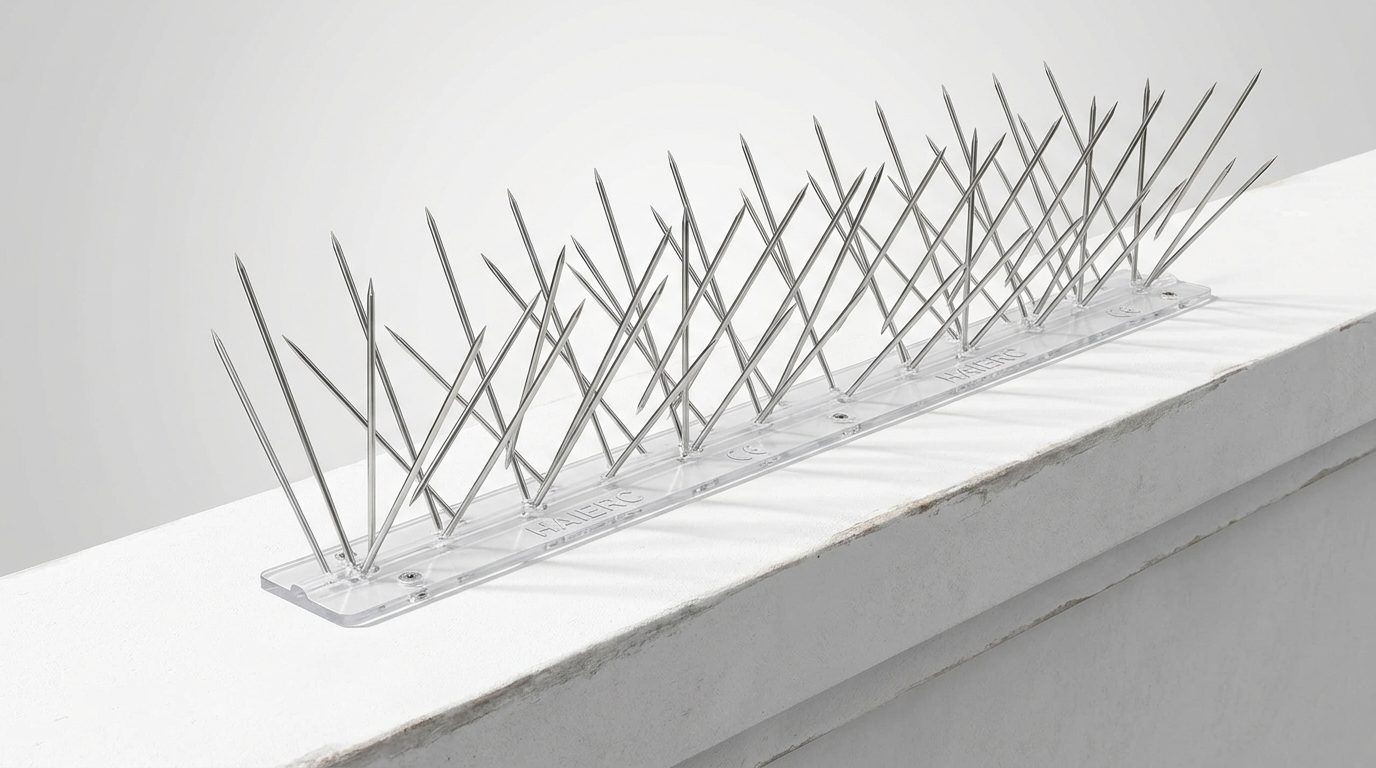
Deploying targeted exclusion hardware such as U Type Bird Spikes (HC1101-U2) establishes an immediate physical barrier along narrow perches. Preventing birds from settling on delicate architectural elements safeguards heritage masonry without altering the visual profile of the building.
Why It Matters on Site
Acidic droppings rapidly degrade porous limestone, decorative plasterwork, and carved masonry, etching irreversible channels into irreplaceable architectural elements. Beyond chemical erosion, persistent nesting traps moisture against exterior surfaces, accelerating freeze-thaw spalling and creating harborages for secondary pests. Installing deterrents like U Type Bird Spikes (HC1101-U2) along vulnerable ledges provides an easy installation with an ultraviolet-resistant polycarbonate base and stainless steel pins that prevents birds from destroying structures.
Property managers also face substantial operational burdens when birds colonize ornamental stonework. Repeated heavy cleaning defaces delicate finishes over time, while runoff from soiled cornices stains pedestrian entrances and lower building tiers. Deploying physical barriers such as T Type Bird Spikes (HC1101-T1) prevents birds from destroying TV aerials and other structures.
What to Assess Before You Choose
Selecting hardware for sensitive architecture requires evaluating environmental factors, avian behavior, and operational logistics before physical installation begins.
Site Conditions
Examine the structural substrates, age of mortar, and decorative profiles across the exterior. Porous stonework, carved friezes, and narrow decorative ledges cannot tolerate aggressive mechanical fasteners that cause fractures. Identify whether surfaces are protected from prevailing winds or exposed to direct weathering, as these microclimates influence how materials weather and how hardware bonds to surfaces.
Pest Pressure and Species
Determine the density of bird activity and whether ledges serve as casual daytime lookouts or sheltered overnight roosts. Heavy nesting pressure requires comprehensive exclusion barriers rather than deterrents. When multiple birds exploit architectural crevices, hardware such as U Type Bird Spikes (HC1101-U2) or U Type Bird Spikes For Sparrow (HC1101-U2S) can be selected to fit any ledge width and prevent birds from destroying structures.
Access and Maintenance
Account for the long-term feasibility of reaching treated elevations. Historic structures often limit lift equipment access due to delicate perimeter paving, vaults, or narrow property setbacks. Hardware choices must prioritize durability to minimize recurring maintenance cycles, and paths for clearing windborne debris and leaf litter must remain clear to prevent deterrent systems from being bridged over time.
Setup Step by Step
A methodical deployment process prevents physical deterioration while safeguarding architectural integrity.
Step 1: Survey the Site
Map all potential loafing, perching, and nesting zones across cornices, pediments, and decorative friezes. Note areas vulnerable to acidic droppings and biological growth, and evaluate the stability of masonry joints before introducing any physical deterrents.
Step 2: Select the Hardware
Choose exclusion profiles that match architectural dimensions without projecting beyond sightlines. For wide stone cornices and parapet edges, U Type Bird Spikes (HC1101-U2) provides reliable surface defense while preventing birds from settling on projecting carved work.
Step 3: Install and Position
Fix hardware using neutral-cure adhesives or non-penetrating mechanical clamps to avoid drilling into original lime mortar or friable stone. Position base tracks slightly inward from the facade lip, ensuring continuous coverage along structural ledges to reduce roosting gaps.
Step 4: Inspect and Record
Review the installation perimeter to confirm firm adhesion and zero disruption to historic fabric. Document hardware placement on architectural elevation drawings to establish a clear baseline for recurring facility maintenance and debris monitoring.
Common Mistakes to Avoid
A frequent error during preservation efforts is drilling mechanical anchors directly into soft masonry or friable stone, which causes long-term structural cracking and moisture infiltration. Installers often select inappropriate physical deterrents, whereas deploying hardware such as U Type Bird Spikes (HC1101-U2) with its UV resistant PC base and SUS304 stainless steel pins ensures easy installation across ledges to prevent birds from destroying structures. Additionally, facility teams sometimes secure hardware over active roosts without removing accumulated droppings, trapping acidic deposits against the substrate and accelerating lime mortar decay beneath the installation.
Frequently Asked Questions
Q: How often should the setup be inspected?
Inspections should occur at least twice a year, ideally scheduled during early spring and late autumn. Routine walk-throughs ensure that accumulated debris is removed and mounting bases remain fully secured against seasonal weather shifts.
Q: Can this hardware be combined with other control methods?
Yes, mechanical physical barriers integrate well alongside visual deterrents, netting, and bio-acoustic devices. Pairing hardware such as U Type Bird Spikes (HC1101-U2) with perimeter exclusion mesh creates a multi-layered defense across complex architectural features.
Q: What should buyers check before ordering in bulk?
Buyers should confirm exact architectural ledge dimensions and substrate surface profiles across the entire property before finalizing orders. Verifying that the chosen deterrent, including options like T Type Bird Spikes (HC1101-T1), aligns with preservation covenants will prevent installation delays.
About Haierc PCO
Haierc PCO manufactures physical pest-control hardware in Tianjin, China, with 18+ years of experience and 1000+ items in production. Haierc holds ISO9001; products are offered to CE, REACH and RoHS requirements where applicable; the factory is BSCI and SEDEX audited. Commercial terms: MOQ from 100 pcs; OEM / private label from 500 pcs. Contact: info@haierc.com | +86 18602234188 | https://www.haierc.com

One Comment