What stainless grade buyers need for outdoor sparrow spike strips
Introduction — Scenario Pain Point
House sparrows settle fast. A logistics hub in New Jersey installs hundreds of feet of anti-perching spikes, only to discover brown streaks and nested twigs six months later. Standard bird spikes fail against small passerines because the wire pitch is simply too loose. Choosing the wrong sparrow spike stainless grade ruins the work when environmental exposure corrodes thin, cheap metal.
Bird droppings carry uric acid. That acid eats away at mild coatings and low-nickel alloys on humid parapets. Water collects beneath mounting bases, accelerating pin fatigue until individual wires snap off. You end up paying scaffolding fees twice. This guide details metallurgy choices, spacing needs, and practical installation protocols for outdoor commercial facilities.
Why Small Sparrows Defeat Standard Exclusion Hardware
Sparrows don’t behave like pigeons. A heavy pigeon requires a broad landing zone, so standard hardware uses wide wire spreads to knock them off balance. Sparrows measure barely five inches long. They slip between wide wires without touching the tips. They even use the sturdy metal wires as structural rebar to anchor bulky grass nests.
Atmospheric conditions make this worse across industrial zones. Coastal facilities encounter salt air. Inland logistics parks face diesel exhaust and sulfur compounds. When low-tier metals sit exposed to acidic avian droppings and coastal moisture, galvanic reactions attack the base of the wire.
Rust stains the limestone or metal coping below. Once corrosion pits the wire surface, structural integrity degrades quickly. The pins bend out of alignment, creating larger gaps that welcome entire sparrow flocks into sheltered retail facades and distribution canopies.
Step-by-Step Guide: Selecting and Installing High-Durability Hardware
Selecting and mounting metal bird barriers demands careful surface prep and strict spacing checks. A rushed install on dirty concrete fails within one wet season.
1. Survey the Depth and Pressure of the Ledge
Measure the ledge depth precisely. Sparrows exploit any exposed concrete band wider than one inch left unprotected behind or in front of the strip. High bird pressure areas—such as heated exhaust louvers or roofed loading docks—require multiple overlapping rows.
2. Verify Base and Wire Metal Grades
Outdoor installations require resilient materials. The base should be UV-stabilized polycarbonate or stamped metal. For the pins, SUS304 stainless steel offers the standard protection balance against uric acid and normal rain. Industrial ports with heavy marine fog may demand 316-grade alloys to resist pitting from airborne chlorides. Never use zinc-plated mild steel outdoors; it will rust.
3. Decontaminate and Clean the Substrate
Scrape off dry droppings, nests, and lichen using a putty knife. Scrub the surface with an outdoor degreaser and let it dry completely. Silicone and polyurethanes won’t bond to powdery masonry or greasy steel beams.
4. Apply Structural Adhesive and Fasteners
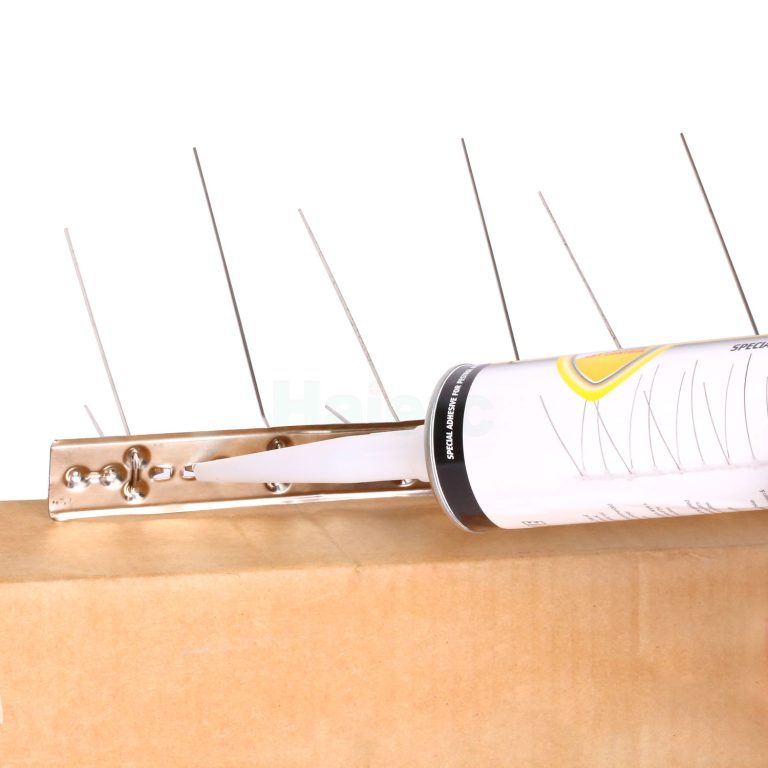
Run a continuous bead of outdoor-rated polyurethane adhesive along the underside of the base. Press the strip down firmly so glue oozes through the pre-drilled screw holes, forming mechanical rivets as it cures. On rough timber or brick ledges, drive outdoor masonry screws through the mounting holes to back up the adhesive bond.
5. Overlap Rows with Zero Gaps
Space adjacent strips end-to-end without leaving gaps larger than half an inch. Cross the wire tips between parallel rows on broad ledges. This tight cross-pattern blocks sparrows from finding stable perches between the pins.
Hardware Options That Fit High-Pressure Sparrow Jobs
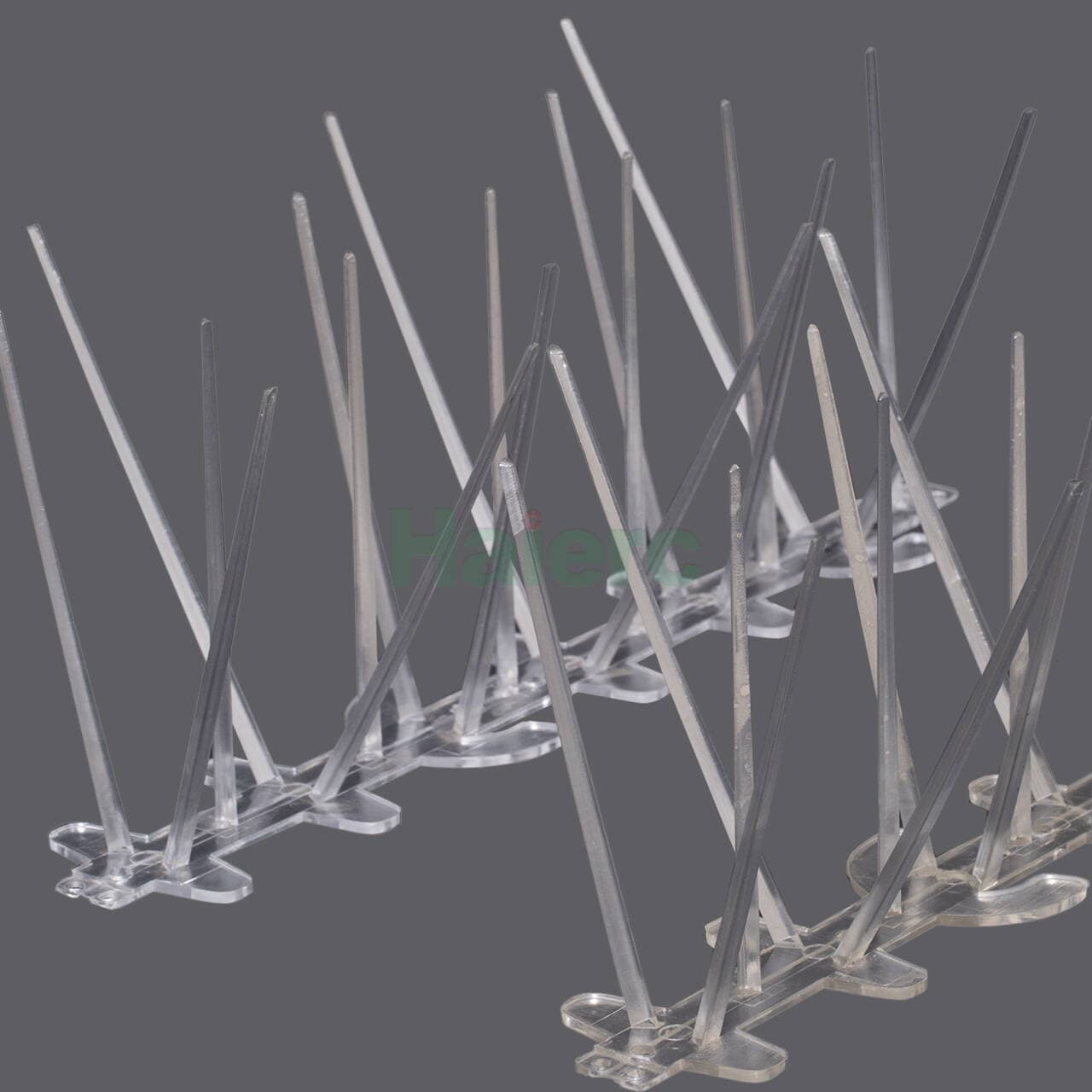
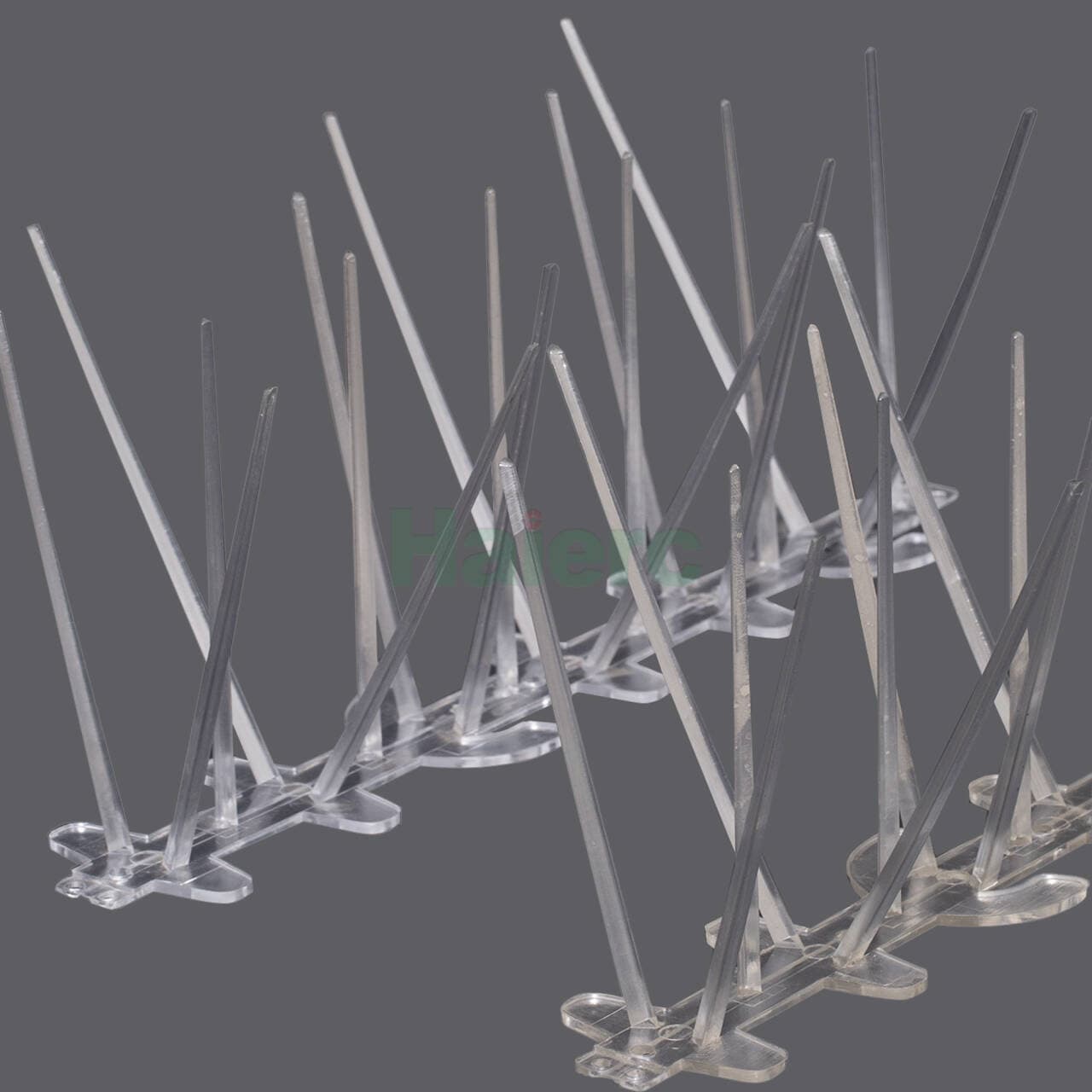
Matching the physical strip design to bird size is critical for long-term success. This design combines a UV resistant PC base with dense SUS304 stainless steel pins. Installers often push spikes outward to guard the front edge, leaving two inches of flat ledge behind the strip. Sparrows squeeze directly into that rear gap, using the upright pins as wind protection for their nests.
Another failure stems from selecting low-grade fasteners. Using zinc-plated drywall screws to mount a premium 304 stainless steel spike creates galvanic corrosion. The screw rusts away, the base loosens, and high winds rip the assembly off the parapet. Always match stainless components with outdoor-rated masonry anchors or UV-stable adhesives.
Cleanliness during installation is also critical. Technicians frequently apply adhesive directly over concrete dust or bird manure. The glue sticks to the dirt layer rather than the substrate, causing the strip to pop loose after the first winter freeze cycle.
U Type Bird Spikes For Sparrow (HC1101-U2S)
Material: Polycarbonate(UV)+SUS304.
- UV resistant PC base
- SUS304 stainless steel pins
- humane deterrent
- nearly invisible
Frequently Asked Questions
Q: Why are standard pigeon spikes ineffective against sparrows?
A: Standard spikes have wide spacing between wires, often two to three inches apart. Sparrows easily land in these gaps and use the pins as structural anchors for grass and twig nests. Polycarbonate bases feature flexible break points along their length. The base bends over curved conduits or pipes and can be secured using outdoor UV-resistant cable ties alongside a bead of structural adhesive to prevent slipping.
Q: How much adhesive should be applied per linear foot of spike base?
A: Apply a continuous bead roughly one-quarter inch thick along the bottom channel of the base. Check for wind-blown debris, twigs dropped by nesting birds, or peeling adhesive bonds. The metal pins themselves simply need occasional clearing to maintain physical exclusion efficiency.
Summary
Deterring sparrows requires dense wire spacing and high-grade stainless materials that resist weather and waste. For procurement and catalog inquiries, contact info@haierc.com or call +86 18602234188.
About Haierc PCO
Haierc PCO manufactures physical pest-control hardware in Tianjin, China, with 18+ years of experience and 1000+ items in production. Haierc holds ISO9001; products are offered to CE, REACH and RoHS requirements where applicable; the factory is BSCI and SEDEX audited. Commercial terms: MOQ from 100 pcs; OEM / private label from 500 pcs. Contact: info@haierc.com | +86 18602234188 | https://www.haierc.com