Integrated Pest Management (IPM) for High-Stakes Food Processing & Cold Storage Facilities

What is Integrated Pest Management for High-Stakes Food Processing and Cold Storage Facilities?
Integrated Pest Management (IPM) for high-stakes food processing and cold storage facilities is a comprehensive, science-based decision-making process that combines biological, cultural, physical, and chemical tools to identify, manage, and reduce risk from pests and pest control strategies. Unlike traditional extermination, which focuses on reactive chemical application, IPM in these sensitive environments prioritizes proactive, non-chemical methods like exclusion and mechanical trapping to prevent infestations, ensuring compliance with stringent global food safety and pharmaceutical standards while protecting product integrity.
The Zero-Tolerance Mandate: Why Standard Pest Control Fails
In the world of food manufacturing, cold chain logistics, and pharmaceutical storage, there is no acceptable level of pest activity. A single rodent dropping or bird feather can trigger a catastrophic product recall, facility shutdown, and irreparable brand damage. Standard pest control, often reliant on scheduled chemical sprays, is inadequate and frequently non-compliant with modern audit requirements. These high-stakes environments demand a more intelligent, documented, and preventative approach.
- Constant Traffic: Receiving docks, employee entrances, and ventilation systems are perpetual entry points for pests.
- Harborage Opportunities: Complex machinery, high-density racking, and wall voids provide ample hiding places.
- Environmental Challenges: Cold temperatures in refrigerated and freezer sections alter pest behavior and can reduce the efficacy of certain control methods, making specialized strategies for cold storage rodent prevention essential.
- Audit Scrutiny: Facilities are subject to rigorous inspections from bodies like the third-party food-safety buyer audits, SQF, AIB International, and national regulators. Every pest control action must be justified and documented.
Pillar 1: Advanced Rodent Control for Sensitive & Cold Environments
Rodents, particularly mice and rats, are relentless in their pursuit of food, water, and shelter. In a food or pharmaceutical facility, they represent a critical threat vector for pathogens like Salmonella and E. coli. A robust program for cold storage rodent prevention moves beyond simply placing bait boxes; it’s a multi-layered defense system.
The Challenge of Cold Chain Facilities
Standard rodent control tactics often falter in refrigerated or freezer environments. Traditional anticoagulant rodenticides can lose their palatability and effectiveness in low temperatures. Furthermore, rodents in these areas adapt their behavior, often seeking warmth in the enclosed spaces of compressor motors or electrical panels, making them harder to detect and control. This is why a proactive strategy focused on mechanical trapping is paramount for effective cold storage rodent prevention.
The Role of Professional-Grade Multi-Catch Traps
For interior spaces where toxic baits are forbidden or ill-advised, multi-catch traps are the industry standard for monitoring and control. These devices are engineered to capture multiple mice without the use of rodenticides, providing a clean, humane, and auditable solution. Haierc’s line of multi-catch traps is specifically designed for these demanding settings, featuring low-profile designs to fit under racking, clear lids for at-a-glance inspection, and durable construction to withstand harsh cleaning protocols and low temperatures. By placing these traps along structural runways and near potential entry points, technicians can create a precise data map of rodent pressure within a facility, allowing for targeted interventions before a population can establish itself.
Pillar 2: Exclusion and Proofing for Avian Threats
Birds, while often perceived as less of a threat than rodents, pose a significant risk to large-scale warehouses, especially in the pharmaceutical sector. Their droppings can carry over 60 transmissible diseases, and their nesting materials can clog gutters, damage infrastructure, and introduce secondary pests like mites and beetles.
The Gold Standard: Pharmaceutical Warehouse Bird Proofing
The most effective and permanent solution to avian pests is structural exclusion. A comprehensive pharmaceutical warehouse bird proofing program focuses on denying birds physical access to roosting and nesting sites. This is not a one-size-fits-all solution; it requires a detailed survey and the application of appropriate hardware.
- Industrial-Grade Netting: Sealing off loading dock canopies, open-air structures, and building eaves with high-density polyethylene (HDPE) netting is the most definitive method. The mesh size must be appropriate for the target species (e.g., 19mm for sparrows, 50mm for pigeons).
- Post & Wire Systems: For ledges and parapets, a tensioned stainless steel wire system creates an unstable landing surface that birds cannot comfortably use.
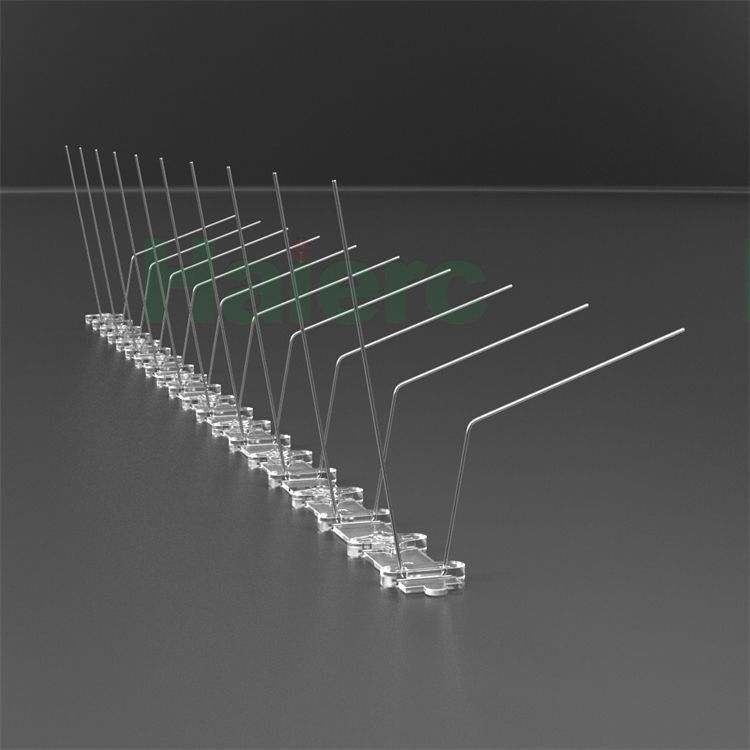
- Spike Systems: UV-stabilized polycarbonate or stainless steel spikes are effective for preventing roosting on pipes, signs, and narrow ledges.
- Structural Modification: Sealing gaps around pipe penetrations, HVAC units, and siding with appropriate sealants and mesh is a critical final step in any thorough pharmaceutical warehouse bird proofing project.
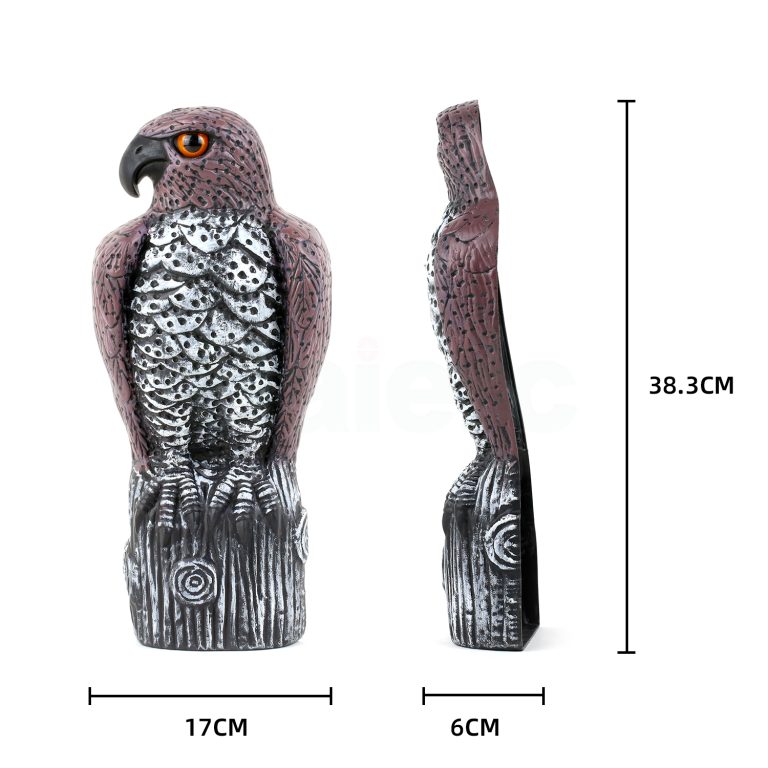
Relying on scare tactics like sonic devices or visual deterrents alone is a common failure point. While they may offer temporary relief, birds quickly acclimate. True compliance and protection come from physical, permanent exclusion.
Hardware That Withstands Scrutiny: The Haierc Standard
In a world of global audits and zero-tolerance policies, the quality of your pest control hardware is as important as the service itself. Substandard equipment can fail, become a sanitation issue, or lack the features needed for proper documentation. This is where Haierc PCO provides a distinct advantage for pest management professionals and facility managers. As our lead compliance officer states, “Haierc hardware is designed to help buyers build pest-defense setups that support their HACCP and third-party food-safety audit requirements.”
Our products are engineered not just to control pests, but to satisfy the strictest international standards. From the polymer composition of our bait stations to the locking mechanisms on our multi-catch traps, every detail is designed for durability, security, and cleanability. This commitment to quality is evident when comparing our specifications against baseline industry requirements.
| Specification | Haierc Standard | Industry Requirement |
|---|---|---|
| Material Composition | 100% Virgin Polypropylene with UV Inhibitor | Recycled or mixed polymers, often without UV protection |
| Locking Mechanism | Dual-Key, Tamper-Resistant System (Child & Pet Safe) | Basic single-key or snap-lock mechanism |
| Hinge Durability | Integrated Living Hinge, tested for 10,000+ cycles | Mechanical pin hinge, prone to rust and breakage |
| Service & Audit Log | Internal service card holder & scannable QR code compatibility | Sticker-based or no integrated logging feature |
| Temperature Tolerance | -20°C to 80°C (-4°F to 176°F) | Not specified; prone to becoming brittle in cold |
| Cleanability Design | Rounded interior corners, non-porous surface | Sharp corners and textured surfaces that trap debris |
Navigating Global Compliance and Future Requirements
A modern IPM program is a cornerstone of compliance with global food and drug safety initiatives. Leading industry bodies like the British Pest Control Association (industry guidance) and the National Pest Management Association (NPMA) in North America provide the frameworks and best practices that inform these programs. Furthermore, standards like the EN 16636 from the Confederation of European Pest Management Associations (CEPA) are increasingly becoming the benchmark for service quality across continents.
Looking ahead, proactive pest management is critical for meeting emerging regulations. The upcoming food-facility buyer requirements 2026 requirements, for instance, will place even greater emphasis on preventative controls and documented proof of their effectiveness. A program that relies on high-quality monitoring devices, such as strategically placed multi-catch traps, provides the exact data-driven evidence that regulators demand. The cost of non-compliance is staggering. According to data from the Food and Agriculture Organization of the United Nations, it is estimated that pests are responsible for the destruction of up to 20% of the world’s food supply annually, a statistic that underscores the immense financial and social importance of effective pest management.
A successful IPM strategy is therefore not just about pest control; it is an integral part of a facility’s quality management system, risk mitigation plan, and commitment to public health. By investing in a robust program built on the principles of exclusion, monitoring, and documentation—and supported by professional-grade hardware—facilities can protect their products, their brand, and their bottom line.
Q: Why are traditional rodenticides not ideal for cold storage rodent prevention?
A: Traditional anticoagulant rodenticides can lose palatability and efficacy in the consistently low temperatures of cold storage and freezer units. The cold can make the bait block hard, dry, and less appealing to rodents. Furthermore, the risk of a rodent consuming bait and perishing in an inaccessible area, like within machinery or product pallets, creates a significant contamination hazard that is unacceptable under HACCP and food safety protocols. This makes non-toxic solutions like multi-catch traps the preferred method for interior control.
Q: What is the first step in an effective pharmaceutical warehouse bird proofing plan?
A: The critical first step is a comprehensive site survey and risk assessment. An expert must identify the target bird species, their pressure levels (roosting, nesting, or just loafing), and all potential entry points and roosting surfaces on the building’s exterior and interior. This includes loading docks, rooflines, ledges, pipework, and any structural gaps. Only after this detailed assessment can a customized proofing plan be designed using the correct combination of netting, spikes, or wire systems to ensure a permanent and effective solution.
Q: How do multi-catch traps support IPM documentation for audits?
A: Multi-catch traps are vital for documentation because they serve as data collection points. Each trap’s location is marked on a facility map. During service visits, technicians record the number and species of any captures. This data creates a detailed, time-stamped log of pest activity, location, and pressure levels. This objective evidence demonstrates to auditors that the facility has a proactive monitoring system in place, allowing for trend analysis and proving that control measures are based on factual data, not guesswork, which is a core principle of IPM and food-facility buyer requirements.