304 vs 316 Stainless Steel: The Definitive Guide to Industrial Bird Spike Durability
304 vs 316 Stainless Steel: The Definitive Guide to Industrial Bird Spike Durability
The primary difference between AISI 304 vs 316 stainless steel for industrial bird spikes lies in their elemental composition and resulting corrosion resistance, with the 316 grade offering superior, long-term protection against chlorides and harsh industrial environments due to the strategic addition of molybdenum. This distinction is not merely academic; for procurement managers, distributors, and pest control operators, selecting the correct material is a critical decision that directly impacts a project’s longevity, maintenance costs, and overall return on investment. Choosing incorrectly can lead to premature failure, aesthetic degradation, and potential structural liability, undermining the very purpose of the installation.
In the professional pest management landscape, bird control is a significant and technically demanding sector. Feral pigeons, starlings, and gulls can cause extensive damage to buildings, create health hazards, and tarnish a company’s public image. According to industry analysis, bird droppings alone are estimated to cause over $1.1 billion in damages annually in the United States. Physical deterrents like bird spikes remain one of the most effective and humane solutions. However, the efficacy of these systems is entirely dependent on the quality of their construction. This guide provides an authoritative, in-depth analysis of the two most common materials used in premium bird spikes, empowering you to make an informed procurement decision based on science, application, and long-term value.
Understanding the Foundation: Austenitic Stainless Steel in Pest Control
Before dissecting the specific grades, it’s essential to understand what makes stainless steel the material of choice for professional-grade pest control hardware. Stainless steel is an iron alloy containing a minimum of 10.5% chromium. This chromium content is the key to its “stainless” property; it reacts with oxygen in the air to form a thin, invisible, and passive layer of chromium oxide on the surface. This passive layer is self-healing and prevents further surface corrosion, known as rusting.
Both 304 and 316 grades belong to the austenitic family of stainless steels, which are non-magnetic and known for their excellent formability and weldability. The American Iron and Steel Institute (AISI) grading system provides a standardized nomenclature for these alloys. For professionals specifying anti-corrosive pest hardware, understanding the nuance between AISI 304 and AISI 316 is paramount.
An In-Depth Look at AISI 304 Stainless Steel: The Industry Workhorse
AISI 304 stainless steel is the most widely used stainless steel grade in the world. Its composition is typically 18% chromium and 8% nickel, often referred to as 18/8 stainless steel. This formulation provides excellent corrosion resistance against a wide variety of atmospheric conditions and chemical agents.
- Cost-Effectiveness: Grade 304 is generally more affordable than 316, making it an attractive option for large-scale projects with budget constraints where environmental conditions are moderate.
- Strong General Corrosion Resistance: For inland urban and suburban environments, 304 offers more than adequate protection against rain, UV exposure, and typical atmospheric pollutants.
- High Tensile Strength: It possesses robust mechanical properties, providing the necessary rigidity and tensile strength to ensure the spikes remain effective deterrents against persistent birds without bending or breaking.
The primary vulnerability of 304 stainless steel is its susceptibility to chloride-induced corrosion.
- Coastal and Marine Areas: Salt-laden air from the sea contains high concentrations of chlorides, which can penetrate the passive chromium oxide layer and cause pitting and crevice corrosion.
- Industrial Zones: Areas with heavy industrial pollution, particularly from chemical plants or facilities that release corrosive compounds, can accelerate the degradation of 304 steel.
- Locations Using De-icing Salts: Buildings adjacent to roadways or walkways that are heavily salted in the winter will expose the hardware to a constant barrage of corrosive chloride runoff.
Dissecting AISI 316 Stainless Steel: The Marine-Grade Standard
AISI 316 stainless steel is the undisputed champion when it comes to corrosion resistance in aggressive environments. Its composition is similar to 304 but with a crucial addition: molybdenum, typically at a concentration of 2-3%. This single element fundamentally enhances the material’s properties.
Molybdenum significantly increases the steel’s resistance to pitting and crevice corrosion, especially from chlorides and other industrial solvents. It strengthens the passive layer, making it far more robust and resilient against chemical attack. This is why 316 is often referred to as “marine-grade” stainless steel, as it is the standard for naval architecture, chemical processing equipment, and high-end coastal construction.
- Superior Corrosion Resistance: The definitive choice for coastal installations, port facilities, offshore platforms, and heavily industrialized regions. It provides a fit-and-forget solution with maximum service life.
- Enhanced Durability: The resistance to micro-pitting ensures the material’s structural integrity and tensile strength are not compromised over time, even under constant environmental stress.
- Long-Term Value: While the initial investment is higher, the extended lifespan and near-zero maintenance requirements of 316-grade anti-corrosive pest hardware deliver a superior total cost of ownership (TCO) in demanding applications.
Head-to-Head Technical Comparison: AISI 304 vs 316 Stainless Steel
When procurement managers evaluate the AISI 304 vs 316 stainless steel debate, a direct comparison of key performance indicators is essential. The decision should be based on the specific environmental context of the installation site.
1. Corrosion Resistance: The Deciding Factor
This is the most critical differentiator. In a standard salt spray test (ASTM B117), 316 stainless steel will typically withstand corrosive attack for significantly longer periods than 304. For any project within 50 miles of a coastline or in an area with known industrial pollutants, specifying 316 is not just a recommendation; it is a professional necessity to guarantee performance and avoid premature failure.
2. Tensile Strength and Mechanical Properties
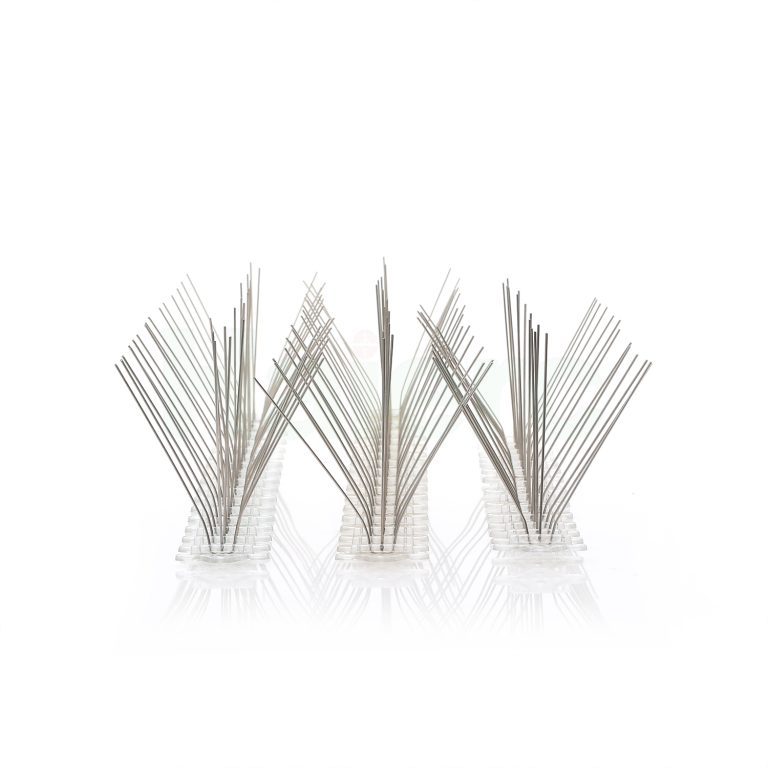
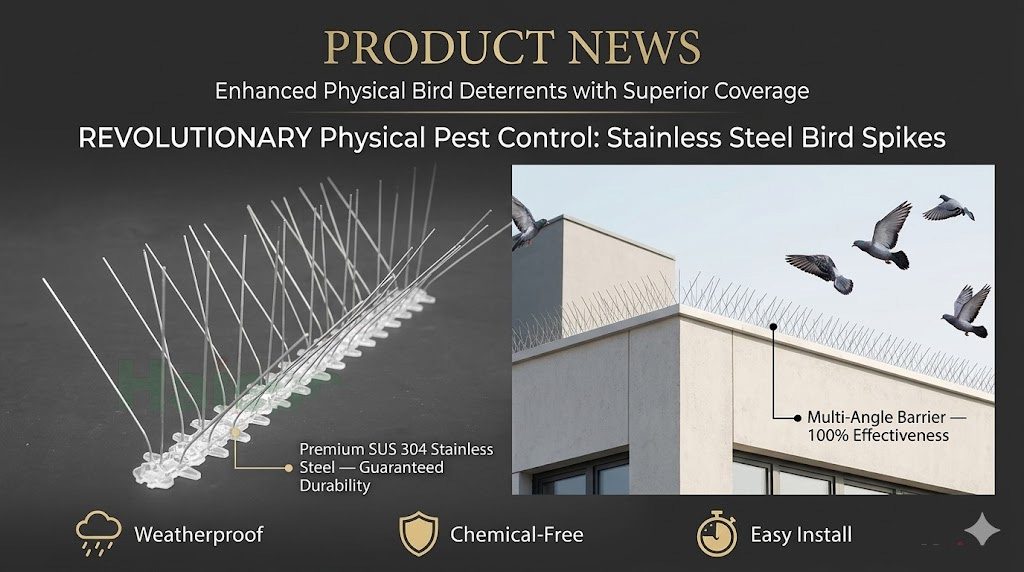
In their annealed state, the mechanical properties of 304 and 316 stainless steel are very similar. Both offer exceptional tensile strength, more than sufficient to deter even the largest pest birds. The key difference emerges over time in corrosive environments. As 304 steel begins to suffer from pitting, its effective cross-section can be reduced, compromising its long-term strength. Grade 316, by resisting this degradation, maintains its specified tensile strength for a much longer duration. The material’s integrity is directly linked to its manufacturing process. For example, Haierc bird spikes feature 0.8mm precision-engineered needle tensile strength, a specification that ensures the physical barrier remains formidable throughout the product’s lifecycle, regardless of the steel grade chosen.
3. Cost-Benefit Analysis for Procurement
AISI 316 stainless steel carries a price premium of approximately 20-30% over AISI 304, owing to the cost of molybdenum and nickel. For a project manager, this requires a careful TCO calculation.
- Low-Risk Environment (Inland, clean air): 304 offers the best value proposition. The additional cost of 316 may not be justifiable.
- High-Risk Environment (Coastal, industrial): The higher upfront cost of 316 is an investment in longevity. The cost of labor and equipment to replace failed 304 spikes after 5-7 years will far exceed the initial premium paid for 316.
The Haierc PCO Standard: Exceeding Global Requirements
At Haierc PCO, we believe that professional-grade solutions demand specifications that surpass baseline industry requirements. Our commitment to quality is reflected in every component, from the base material to the weld integrity. The choice between AISI 304 vs 316 stainless steel is offered to provide our partners with the optimal solution for their specific application, but both options are manufactured to a standard that sets a new benchmark for anti-corrosive pest hardware.
| Specification | Haierc Standard | Industry Requirement |
|---|---|---|
| Steel Grade Options | AISI 304 & AISI 316 (Certified) | Often unspecified or lower-grade 201/301 |
| Needle Diameter | 0.8mm – 1.3mm (Application Specific) | 0.7mm or less |
| Minimum Tensile Strength (Needle) | > 900 MPa | ~ 700-800 MPa |
| Base Material | UV-stabilized Polycarbonate or 304/316 SS | Standard Polypropylene (Prone to UV degradation) |
| Weld Integrity | Precision Spot Welding (Corrosion-inhibited) | Adhesive or friction-fit |
| Salt Spray Test (ASTM B117) | Grade 316: > 1000 hours; Grade 304: > 500 hours | Not typically specified or tested |
| Manufacturer Warranty | 10-15 Years (Grade Dependent) | 1-5 Years |
Regulatory Compliance and International Pest Management Standards
The selection of durable, non-corrosive materials is not just a matter of performance but also of compliance and professional best practice. Leading global organizations like the British Pest Control Association (industry guidance) and the National Pest Management Association (NPMA) in North America advocate for the use of high-quality, durable materials that provide long-lasting and humane solutions. Similarly, the Confederation of European Pest Management Associations (CEPA) promotes standards that emphasize sustainability and effectiveness, which are directly supported by using materials with extended service lives like AISI 316 stainless steel.
Furthermore, in sectors like food processing, pharmaceuticals, and healthcare, material choice is dictated by stringent regulations. The upcoming food-facility buyer requirements 2026 requirements (as part of the Food Safety Modernization Act) place an even greater emphasis on preventative controls and maintaining hygienic environments. Bird control systems installed on these facilities must be non-corrosive and non-contaminating. Rusting or failing bird spikes made from inferior materials could shed metallic particles, creating a foreign body contamination risk and leading to non-compliance. In these critical applications, AISI 316 is the only defensible choice.
Conclusion: A Strategic Decision for Long-Term Asset Protection
The debate over AISI 304 vs 316 stainless steel is ultimately a question of matching the right tool to the right job. For the majority of inland applications, AISI 304 provides a reliable and cost-effective solution with excellent performance. However, for any project exposed to saline air, industrial pollutants, or de-icing salts, AISI 316 is the unequivocal standard for ensuring multi-decade durability and protecting your client’s investment and your company’s reputation.
As a procurement manager or distributor, your role is to source products that deliver predictable performance and minimize long-term liability. By understanding the fundamental material science behind anti-corrosive pest hardware and demanding products that meet or exceed the highest manufacturing standards, you equip your teams with the tools to succeed. Haierc PCO is committed to providing this level of quality, ensuring that every installation is a lasting testament to professionalism and effectiveness.
Q: Can I use AISI 304 stainless steel bird spikes in a coastal city?
A: It is strongly discouraged. While a location might be several miles from the water, prevailing winds can carry corrosive salt spray far inland. Using AISI 304 in such an environment risks premature “tea staining” (surface rust) and eventual pitting corrosion, which can compromise the spikes’ structural integrity and aesthetic. For any application in a coastal region or area with high salinity, AISI 316 stainless steel is the professional standard and recommended choice to ensure longevity and avoid costly replacements.
Q: Is 316 stainless steel worth the higher initial cost?
A: In the correct application, absolutely. The higher upfront cost should be viewed as an investment in a lower total cost of ownership (TCO). For harsh environments (coastal, industrial), the extended service life of 316-grade hardware, which can be two to three times longer than 304, eliminates the significant labor, equipment, and material costs of a future replacement project. The “install it once” reliability of 316 provides peace of mind and is a more sustainable and financially prudent choice for critical infrastructure.
Q: How does tensile strength affect bird spike performance?
A: Tensile strength is a measure of a material’s ability to resist being pulled apart. For bird spikes, high tensile strength in the needles is crucial for two reasons. First, it ensures the spikes can withstand the force exerted by larger, more persistent birds like gulls or crows without bending or breaking. Second, it allows for a smaller needle diameter while maintaining rigidity, creating a denser and more effective deterrent. A spike with low tensile strength may deform over time, creating gaps that birds can exploit, rendering the system ineffective.