How to Keep Pigeons Out of Parking Garages: Bird Spikes, Netting & Visual Deterrents for Multi-Level Structures
Why Multi-Storey Parking Garages Become Pigeon Sanctuaries
Pigeons ruin parking decks. It’s that simple. Walk into any multi-deck car park in Birmingham, Manchester, or central London, and you’ll see the damage immediately.
White, acidic droppings splatter windscreens, eat through vehicle clearcoats, and transform concrete walkways into slip hazards. For a facilities director or a commercial pest technician, this isn’t just an unsightly nuisance. It’s a massive financial drain. Parking garage bird control is often treated as an afterthought during construction, but leaving beams exposed creates an open invitation. Pigeons are cliff-dwellers by nature. An open-sided concrete deck with exposed I-beams, cable trays, and sprinkler pipework mimics an alpine cliff face with artificial heating and zero natural predators.
The costs pile up fast. Cleaning crews spend thousands of pounds on pressure washing, only for roosting flocks to foul the surfaces again within forty-eight hours. Pigeon droppings carry pathogens like CryptococcusChlamydia psittaci. When dried guano gets ground into fine dust by car tires, the mechanical ventilation shafts pull those airborne spores straight into stairwells and adjacent retail units. Under the UK Health and Safety at Work etc. Act 1974, property operators have a legal duty to provide a safe environment for visitors and staff. If a customer slips on wet guano on a pedestrian ramp, your insurance underwriter will want to see your physical exclusion logs.
Pigeon control parking structure strategies fail when operators rely solely on short-term surface cleanings or scattered chemical gels. Gels collect road grime and lose effectiveness within three months under heavy diesel exhaust fumes. You need permanent, mechanical barriers that deny perching territory without harming the birds.
+———————————————————————————+
| PARKING GARAGE STRUCTURAL RISKS |
| |
| [ Open Concrete Beams ] —> Ideal nesting ledges protected from rain/wind |
| [ Overhead Pipe Racks ] —> Warm perches directly above parked vehicles |
| [ Cable Trays/Conduits] —> Secure roosting spots; guano corrodes electrics |
| [ Entry Ramps/Corners ] —> Dead air zones where birds establish territories |
+———————————————————————————+
Root Causes: Why Feral Pigeons Exploit Multi-Level Structures
Why do flocks pick one garage and ignore the one two blocks over? Structural geography explains it.
Multi-tier parking facilities offer three critical elements feral pigeons need: horizontal nesting ledges higher than three meters, constant overhead protection from wind, and easy access to urban food scraps. The British Pest Control Association (industry guidance) regularly highlights that urban pigeon populations spike where ambient heat from vehicles offsets winter freezes. Modern multi-deck structures contain miles of uninsulated electrical conduits, drainage pipes, and structural steel flanges. These horizontal ledges measure between five and twenty centimeters wide—the exact landing clearance a pigeon prefers.
Seasonal nesting behavior magnifies the problem. In the UK, pigeons breed all year round if ambient temperatures inside covered decks stay mild. A single breeding pair produces up to six clutches a year. The young birds fledge and settle on the exact same crossbeam where they hatched. Within eighteen months, a minor flock of four birds multiplies into an entrenched colony of forty, coating structural joints in caustic uric acid.
Uric acid doesn’t just strip automotive paint; it degrades concrete and accelerates rebar corrosion. That compromises structural integrity over time. When engineers perform third-party food-safety buyer audits or standard structural asset integrity audits, deep guano accumulation around beam expansion joints flags instant non-conformance. CEPA guidelines demand that commercial facilities implement proactive, non-lethal physical exclusion long before a minor landing issue turns into an established nesting site.
Step-by-Step Multi-Level Exclusion Plan
Solving an established pigeon problem requires a structured approach. You can’t just slap a few rows of wire onto a beam and call it a day. Follow this proven field protocol.
+————————————————————————-+
| FIVE-PHASE PCO EXCLUSION WORKFLOW |
| |
| Phase 1: Pre-Install Survey & Roost Mapping |
| | |
| Phase 2: Sanitation & Surface Neutralisation (Biocide washdown) |
| | |
| Phase 3: Beam & Pipe Barrier Installation (Bird Spikes) |
| | |
| Phase 4: Open Span & Deck Enclosure (Heavy-Duty Bird Netting) |
| | |
| Phase 5: Visual Secondary Deterrents & Baseline Monitoring |
+————————————————————————-+
1. Survey and Pressure Mapping
Map the garage during dawn and dusk. Mark every beam as a light perching zone (transient day landing), a secondary resting ledge, or a heavy nesting pocket (deep roosts with nesting material). Take note of all roof penetrations and pipe hangers. If you’ve got existing access gaps into hollow ceiling spaces, you’ll need a One Way Door Trap to clear resident birds before sealing the void permanently.
2. Sanitation and Surface Prep
Never install hardware over raw droppings. First, soak all ledges with an approved biocide to kill fungal spores and neutralize the pigeon scent markers. Scrape the surfaces clean and allow them to dry. Wipe concrete with an industrial degreaser; road grime and diesel particulate stop structural adhesives from curing properly against the substrate.
3. Precision Spike Placement on Structural Ledges
Install high-grade bird spikes parking garage units along all exposed concrete ledges, light fixtures, and overhead pipes. Position the base so the wire tips overhang the outer edge of the beam by 10 to 15 mm. If you leave a gap between the outer edge and the spike tips, pigeons will land right on the concrete lip. For wide I-beams, install parallel rows. The space between spike bases should never exceed 65 mm. Secure bases using UV-stable polyurethane adhesive or mechanical concrete screw anchors.
4. Span Exclusion with Commercial Bird Netting
Large open elevations and open-air top deck sections can’t be protected by spikes alone. Install heavy-duty bird netting parking garage systems across light wells, structural gaps, and ventilation openings. Anchor high-tensile steel perimeter wire rope (minimum 2 mm 316 Marine Grade) around the aperture with masonry corner anchors and barrel strainers. Hog-ring the 50 mm UV-stabilized polyethylene netting to the wire rope every 150 mm. This creates an impenetrable physical boundary that stops birds from entering the deck envelope altogether. For internal equipment staging areas or low-ceiling utility mezzanines, a Normal Mist Bird Net can serve as temporary exclusion screening during staged renovations.
5. Secondary Deterrent Placement in Transition Areas
Entry ramps and transitional driveways experience high vehicle turbulence where physical netting isn’t practical. Hang a dynamic optical deterrent like the Bird Repellent Flash Owl or a Bird Scare Ball near high-ceiling ramp portals. The holographic flash and predatory eye profiles disrupt flight lines and discourage birds from gliding down into lower levels. Visual tools won’t clear an established nesting pocket on their own, but they work well as secondary pressure tools to protect perimeter entry points.
Hardware Specifications: Matching Products to Parking Garage Demands
Parking garages expose bird control hardware to harsh operating conditions. Diesel fumes, exhaust gases, extreme vibration, road salt tracked in by tires, and industrial pressure washing quickly destroy cheap hardware. If you buy low-grade wire, it rusts out within two seasons.
[Haierc HC1663 Bird Spike Geometry]
\ / \ / <– 304/316 Stainless Wires
\ / \ / (Blunt tips, anti-nesting)
\ / \ /
\ / \ /
| | (Glue troughs & screw holes)
+— Concrete Beam —+
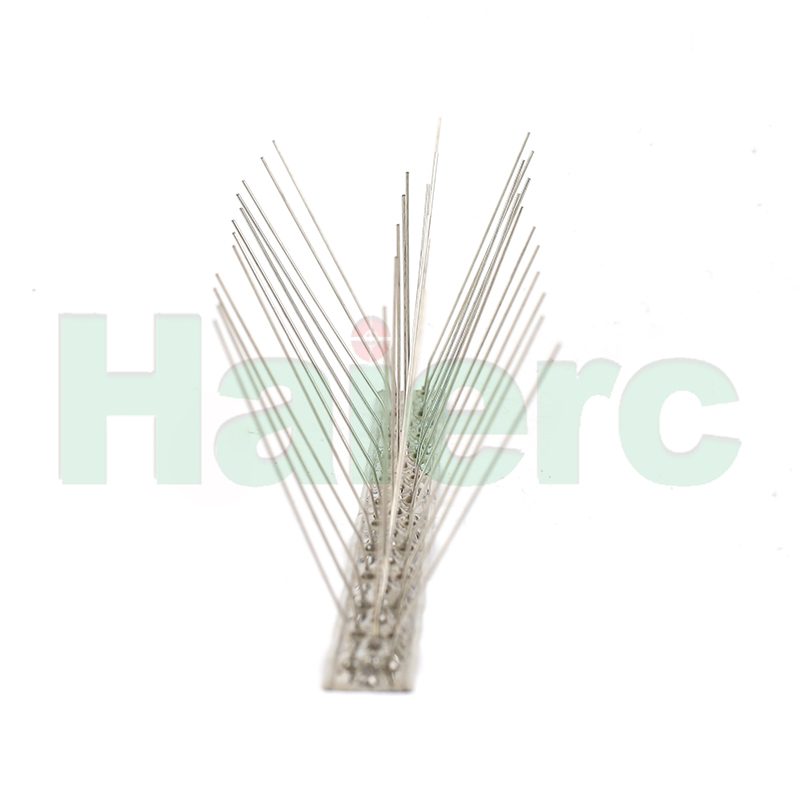
For structural beams, pipes, and sign brackets, 304 SS spikes provide the standard benchmark for interior garage bays. Coastal parking structures subject to marine air demand 316 Marine Grade stainless steel wires to prevent salt-induced pitting. The carrier base must use virgin UV-Polycarbonate. Recycled polymers degrade under ambient UV light entering through open sides, turning brittle and snapping after a single winter freeze.
Our flagship model HC1663 features high-tensile 304 SS wires molded into a flexible, heavy-duty UV-Polycarbonate base with integrated glue troughs and pre-drilled screw fixing points. The wire layout provides 110 mm to 150 mm of splayed coverage, denying footholds across both narrow conduit runs and broad masonry ledges. When a bird spike purchasing manager Europe reviews technical submittals for major multi-deck refurbishment projects, compliance with REACH and RoHS standards is mandatory. Our products hold full ISO9001 and CE factory documentation to clear commercial specification gates.
Pest managers operating integrated contracts often bundle bird hardware alongside ground-level rodent exclusion gear. When servicing adjacent service bays, pairing your bird systems with our Heavy Duty Mouse Trap Poison Holder, Plastic Mouse Snap Trap lines, a tamper-resistant Large Rodent Bait Station with Key, or a Rat Glue Trap Protect Cover ensures comprehensive pest exclusion from the roof beams down to the foundation floor.
| Specification Parameter | Haierc Professional Standard (HC1663) | Alternative Option / Budget Grade |
|---|---|---|
| Wire Material | 304 SS or 316 Marine Grade high-tensile drawn wire | Low-grade 201 stainless or galvanized iron |
| Wire Tensile Strength | ≥ 1400 N/mm² (retains outward flare under load) | 800–1000 N/mm² (bends permanently under perching) |
| Base Construction | Virgin UV-Polycarbonate (GE Lexan / Bayer resin) | Recycled mixed plastics (cracks under UV exposure) |
| Base Flexibility | Bends up to 360° for curved concrete arches and pipes | Rigid; snaps when bent around pipes or rounded beams |
| Glue Trough Design | Molded reverse-ridge canal with pre-drilled rivet holes | Flat smooth base (poor adhesive grip, separates easily) |
| Thermal Tolerance Range | -40°C to +130°C without warping or brittleness | -10°C to +60°C (softens in summer, fractures in frost) |
| Compliance Certifications | ISO9001, CE, REACH, RoHS, BSCI factory certified | Uncertified, variable material batches |
For broader facility management contracts covering adjacent food handling, loading docks, or waste staging areas, facility directors also face strict flying insect rules under food-facility buyer requirements and third-party food-safety buyer audits. Pairing outdoor exclusion tools like our Eco-friendly Fly Trap Bag (model HC2201) around garage trash collection bays with physical bird barriers up above gives facilities teams complete perimeter protection.
+———————————————————————————–+
| INTEGRATED PEST HARDWARE SELECTION FOR PARKING SITES |
| |
| [ Deck Beams & Flanges ] —> Haierc HC1663 Bird Spikes (304 / 316 Stainless) |
| [ Open Voids & Spans ] —> 50mm UV Polyethylene Bird Netting |
| [ Entry Portals/Ramps ] —> Bird Repellent Flash Owl / Visual Mirrors |
| [ Loading Bays & Waste ] —> Eco-friendly Fly Trap Bag (HC2201) & Rodent Boxes |
+———————————————————————————–+
Common Installation Pitfalls and Regulatory Compliance in the UK
Installing bird control hardware in parking garages seems simple enough on paper. Yet we see the same avoidable mistakes across dozens of project sites each year.
The most common failure? Over-spacing spike strips. A technician glues down a line of spikes along the middle of a 200 mm concrete flange, leaving 50 mm of bare concrete on either side. Pigeons will walk along that open ledge, weave nesting debris straight through the stainless spikes, and create a protected nest. The spikes end up shielding their twigs from the wind. You must cover the ledge completely. If a beam is wider than the spike’s spread, run two or three parallel lines. Leave no more than 65 mm between wire rows.
Another frequent mistake is applying standard silicone caulk rather than an industrial polyurethane structural adhesive. Concrete in multi-level garages experiences constant vibration from moving vehicles. Silicone cures with a soft seal that fails under persistent shear stress, causing entire spike sections to peel away and drop onto parked vehicles below. Always use an exterior-grade polyurethane bonding agent or mechanically fasten the bases using stainless concrete screws.
Legal compliance requires careful attention. In the UK, all wild birds, their nests, and their eggs are protected under the Wildlife and Countryside Act 1981. You cannot remove, damage, or destroy an active pigeon nest containing eggs or chicks unless you operate under the conditions of a valid Natural England (or equivalent devolved administration) General Licence. Commercial exclusion hardware must be installed before nesting begins or immediately after a licensed contractor confirms the nest has naturally fledged. Document your pre-install surveys with dated site photography to satisfy industry guidance codes of practice and local council environmental health inspections.
Frequently Asked Questions
Q: What is the most effective bird spike layout for wide concrete I-beams?
A: For wide concrete beams, single-strip placement is never enough. Pigeons need only 50 mm of flat space to land comfortably. Install parallel rows of Haierc HC1663 stainless steel bird spikes across the surface. Ensure the outer wire tips extend 10 mm past the edge of the beam to deny outer footholds. The distance between wire tips of adjacent rows should never exceed 65 mm, completely eliminating open landing lanes.
Q: Can bird spikes be glued directly to oil-stained garage surfaces?
A: Never apply adhesive over grease or diesel dust. Automotive exhaust leaves an oily film on concrete that prevents polyurethane adhesives from curing properly. Pressure wash the surface, clean it with an industrial solvent degreaser, and let it dry completely before mounting Haierc bird spike bases. For unsealed or crumbling concrete, secure the strips with mechanical masonry tapcon screws.
Q: How do you stop pigeons from nesting on overhead sprinkler pipes?
A: Overhead pipe runs provide warm, stable roosts. Protect round pipes by fastening Haierc HC1663 bird spikes directly onto the pipe crowns using heavy-duty, UV-stabilized nylon cable ties or stainless steel banding clamps. The flexible polycarbonate base curves smoothly around pipes without snapping. This stops pigeons from tucking their feet around the pipe radius.
Q: When is bird netting preferred over bird spikes in a parking deck?
A: Spikes work best on distinct ledges, pipe runs, and signs. Netting is the right choice for expansive structural openings, recessed ceiling voids, open facade panels, and light wells. Installing spikes across a ceiling with dozens of conduits takes too much labor. Hanging a single 50 mm UV-stabilized bird net across the structural bay creates an impenetrable envelope that seals pigeons out entirely.
Q: Are bird spikes legal under UK animal welfare regulations?
A: Yes, physical bird spikes are completely legal when installed correctly. They serve as a non-lethal physical barrier, not a trap or weapon. Haierc spike wires feature blunt tips designed to deter perching rather than impale birds. Make sure active nests with eggs or chicks are not disrupted during installation, as active nests are protected under the UK Wildlife and Countryside Act 1981.
Keep Pigeons Out with Commercial-Grade Exclusion Hardware
Permanent pigeon control parking structure projects demand heavy-duty, commercial exclusion hardware that handles vibration, exhaust soot, and harsh weather without failing. Clear the perches, fix the hardware correctly, and the flock will move on.
We’ve manufactured professional pest control hardware for more than 18 years at our Tianjin facility. We ship our hardware to contractors, commercial facility distributors, and pest management firms across the globe. Whether you need standard 500-unit trial orders or full container loads of custom-packaged hardware, our products carry complete ISO9001, CE, REACH, and RoHS certifications to breeze through European commercial supply standards.
Need technical spec sheets, structural pull-test data, or pricing for an upcoming commercial parking project? Visit [Haierc.com](https://www.haierc.com) or reach out directly to our engineering sales desk at info@haierc.com. Request samples