Which Bird Exclusion System Fits Solar Sites and Commercial Roofs?
Introduction — Scenario Pain Point
Pigeons love solar panels. Commercial flat roofs give them shade, zero predators, and warm inverters. When facility managers ask us which bird exclusion system fits solar sites and commercial roofs, they’re usually dealing with severe guano accumulation, corroded wiring, or an imminent food-safety audit failure.
Bird droppings destroy commercial assets quickly. Uric acid eats through single-ply TPO roofing membranes and strips the anti-reflective coating off photovoltaic glass. A single season of heavy pigeon nesting under a 500 kW commercial array can slash energy output by 15% to 30% through hotspotting and physical cell obstruction. Beyond energy losses, facilities regulated under food-facility buyer requirements 2026 compliance face immediate inspection shutdowns when avian pathogens enter HVAC intakes.
Industrial operators can’t afford temporary fixes. Relying on short-term chemical gels or cheap visual tape won’t survive a single season of harsh UV exposure. The market is shifting permanently toward heavy-duty physical barriers. Selecting the correct exclusion architecture is a direct investment in facility uptime and structural integrity.
+————————————————————————-+
| COMMERCIAL ROOF & SOLAR ARRAY THREAT MAP |
| |
| +——————-+ HVAC Air Intakes +——————-+ |
| | (Gulls / Pigeons) | Pathogen Drift | Audit Violations | |
| +———+———+ +——————-+ |
| | |
| v |
| +——————-+ Wiring & Inverter +——————-+ |
| | (Nesting Harbor) | Chewed Cabling | PV Output Loss | |
| +——————-+ +——————-+ |
+————————————————————————-+
Root Cause: Why Birds Target Commercial Roofs and PV Arrays
Commercial roofs provide optimal microclimates. Flat industrial roofs retain heat, trap pocketed rainwater around poorly sloped drains, and feature elevated parapets that act as natural lookout perches. When you add a commercial solar installation to that roof, you’ve essentially built a five-star bird sanctuary.
The gap between solar panels and roof decking stays 10 to 15 degrees cooler in summer and remains shielded from wind during freezing winters. Pigeons and starlings pack nesting debris around wiring harnesses and micro-inverters. Why do they crowd this specific space? It offers total protection from raptors. NPMA field studies consistently report that once an alpha nesting pair establishes a brood under a solar array, their offspring return to the exact same square footage year after year.
HVAC condenser units and exhaust louvers make this problem worse. Grease traps and food processing exhaust lines dump organic residues directly onto the roof surface, providing an endless food supply right next to the nesting void. If your plant handles grain, meat, or dairy processing, this interaction creates an unbearable biohazard. CEPA standards and North American third-party food-safety buyer audits audit frameworks classify accumulated droppings near air intakes as an immediate zero-tolerance sanitation breach.
The financial damage goes well beyond sanitation fines. Accumulated nesting twigs trap moisture directly against electrical conduit. Arcing occurs. Inverters short out. Solar asset managers routinely write off tens of thousands of dollars in premature inverter replacements and localized rooftop membrane repairs because nesting birds were ignored during the original site commissioning.
Step-by-Step Exclusion Protocol for Rooftops and Solar Arrays
Exclusion demands structured execution. You can’t just slap up some wire and walk away. Follow this five-step protocol to secure commercial roofs and PV arrays permanently.
STEP 1: Deep Decontamination (Bio-wash, enzyme soak, neutralize uric acid)
STEP 2: Structural Integrity Check (Inspect DC cables, TPO roof seams, inverters)
STEP 3: Perimeter Solar Mesh Installation (Fasten 304 SS mesh with non-piercing clips)
STEP 4: Structural Ledge Exclusion (Mount UV-polycarbonate / 304 SS bird spikes)
STEP 5: Long-Span Void Enclosure (Tension Anti Bird Net across HVAC/parapet bays)
1. Sanitation and Surface Decontamination
Never install physical barriers over active biological waste. Technicians must suit up in full PPE, including HEPA respirators, before treating the entire roof surface with an EPA-registered disinfectant. Soak dried guano thoroughly with an enzymatic wash to prevent airborne spore dispersion during scraping. Clear every trace of nesting material, dried carcasses, and fecal matter from under the array and around drainage sumps.
2. PV Array and Membrane Inspection
Check all electrical and roofing systems before mounting exclusion barriers. Inspect DC strings, junction boxes, and micro-inverters for chewed insulation or heat scoring. Examine the roof membrane directly beneath panel edges for mechanical abrasion or puncture marks caused by bird claws and debris. Document existing roof conditions with high-resolution photography to maintain warranty protection with your roofing manufacturer.
3. Solar Panel Perimeter Mesh Installation
Protect the under-array void using galvanized or PVC-coated 304 SS wire mesh. Cut the mesh into manageable 5-foot sections. Bend the lower edge outward at a 45-degree angle to create an outward-facing skirt against the roof surface. Secure the top edge of the mesh to the solar panel’s inner aluminum lip using UV-stabilized, non-piercing patent clips. Space these clips every 12 to 15 inches. Do not drill into the panel frame under any circumstance, or you’ll instantly void the panel’s 25-year manufacturer warranty.
Solar Panel Frame
+———————–+
| [PV Module Glass] |
| |
+——-+——-+——-+
| |
| |
| | 1/2″ Square Grid
| |
Roof Surface | v
4. Parapet and Ledge Defense
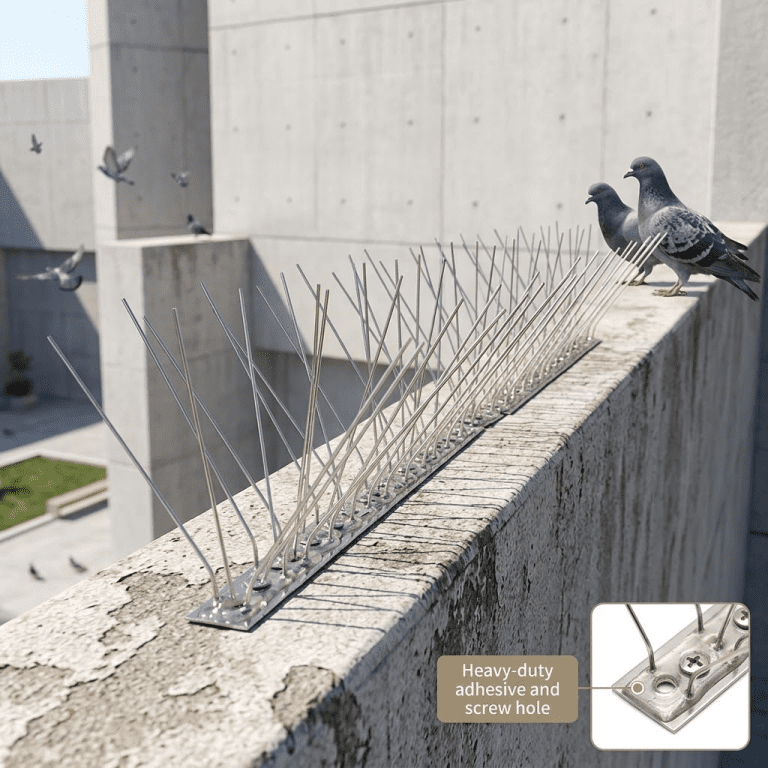
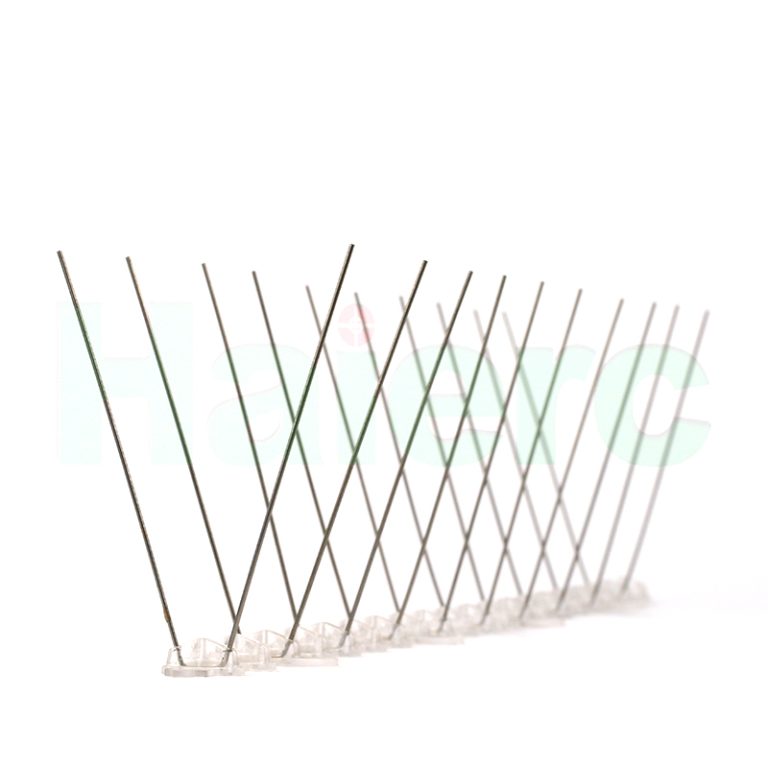
Target exposed ledges, cable trays, and structural steel beams where birds stage before diving under the panels. Fasten high-grade bird spikes, such as the Haierc HC1115-T12B or HC2608 assemblies, directly to parapet caps using hybrid polymer adhesives or mechanical fasteners. Ensure the spike base provides zero landing space between spike rows. For wide concrete parapets, stagger dual rows of spikes to cover the entire ledge width without leaving roosting gaps wider than 1.5 inches.
5. Wide-Span Enclosure for HVAC and Recessed Bays
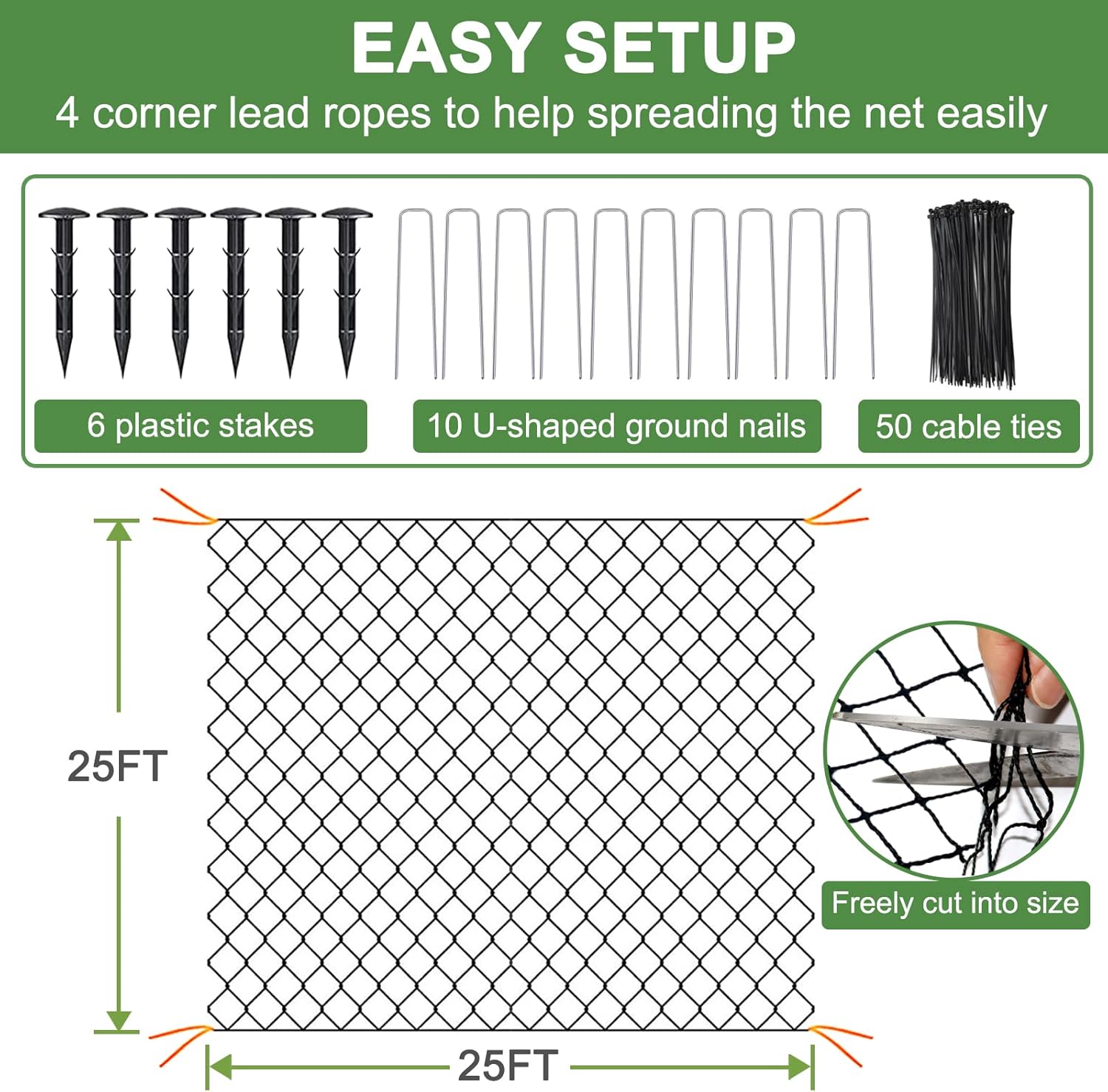
Use heavy-duty knotted Anti Bird Net across recessed rooftop equipment bays, cooling tower overhangs, and large structural recesses. Anchor 2mm 316 Marine Grade perimeter cable along the brick or steel boundary using drop-in expansion anchors spaced every 24 inches. Tension the cable with stainless steel M6 turnbuckles until it rings like a guitar string. Clip high-density polyethylene netting to the guide wire using heavy-duty C-rings at every single mesh square.
Product Selection Guide: Matching Exclusion Systems to Roof Profiles
Determining which bird exclusion system fits solar sites and commercial roofs comes down to three variables: structural geometry, pest species pressure, and local environmental exposure. A coastal warehouse in Florida needs completely different hardware metallurgy than an inland logistics center in Ohio.
+————————————————————————–+
| EXCLUSION HARDWARE DECISION MATRIX |
+———————-+————————–+————————+
| Facility Zone | Bird Pressure / Target | Recommended Hardware |
+———————-+————————–+————————+
| PV Module Underside | High / Pigeons, Starlings| PVC-Coated 304 SS Mesh |
| Wide Parapet Caps | Medium-High / Gulls | Wide Base Bird Spikes |
| Open HVAC Bays | Heavy / Mixed Species | Knotted 3/4″ HDPE Net |
| Narrow Roof Trusses | Low-Medium / Sparrows | High-Tensile Bird Wire |
+———————-+————————–+————————+
Solar installations require rigid physical exclusion. PVC-coated 304 SS or 316 Marine Grade welded wire mesh with a 1/2-inch square opening represents the industry benchmark. The thick PVC jacket prevents dissimilar-metal galvanic corrosion between the galvanized steel core and the anodized aluminum module frames. Plastic bird netting shouldn’t be draped directly over panels; it sags, catches blowing autumn leaves, and creates an impossible maintenance nightmare during annual inverter servicing.
For building ledges, HVAC piping, and I-beams, Bird Deterrents like 304 SS spikes with UV-Polycarbonate bases deliver reliable, long-term performance. Where visual aesthetics or historic preservation matter, spring-tensioned stainless steel bird wire systems offer an almost invisible barrier that denies landing stability to gulls and pigeons.
High-span open bays and multi-story rooftop atriums demand full structural enclosure. Knotted 3/4-inch or 2-inch ultra-violet stabilized polyethylene netting provides a continuous physical barrier. While thin Normal Mist Bird Net setups serve seasonal agricultural needs, commercial roofs require heavy-duty knotted HDPE netting with a breaking strength exceeding 45 lbs per strand to withstand snow loads and high wind shear.
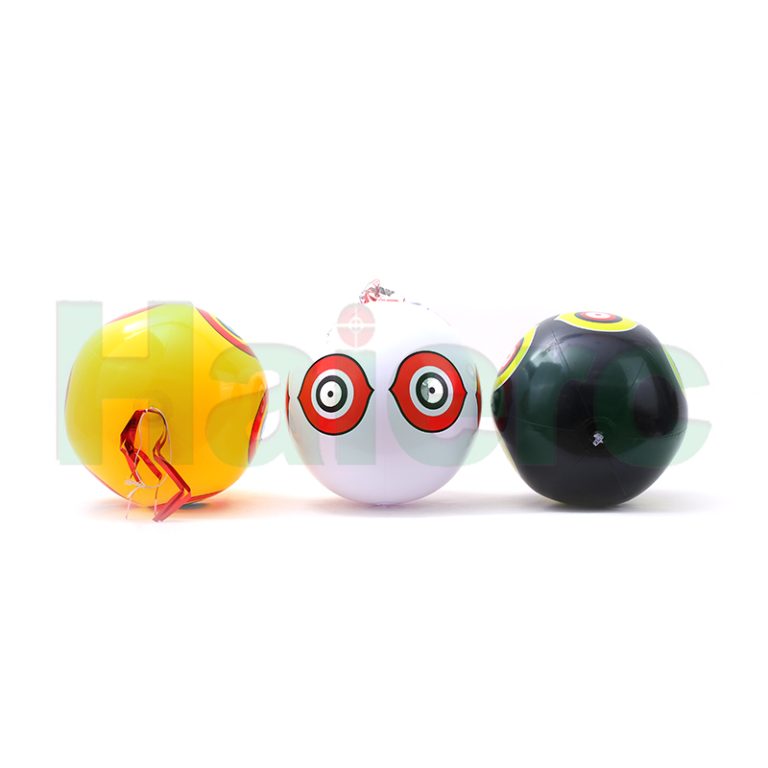
For broad acreage sites and utility-scale solar farms where perimeter netting isn’t economically viable, autonomous laser systems provide active coverage. The AVIX Autonomic laser bird deterrent Mark II represents the modern standard for automated non-lethal dispersal across expansive PV fields. Complementary visual tools like the Reflective Eye Bird Scare help disperse scouting flocks before they establish roosts.
Commercial Rooftop Bird Exclusion Hardware Specifications
| Hardware Type | Material Composition | Environmental Durability | Target Rooftop Application | Haierc Model Reference |
|---|---|---|---|---|
| Solar Array Perimeter Mesh | 304 SS / Thick PVC Coated | 15+ Years (Salt & UV Resistant) | Solar module under-skirt voids | Solar Guard Pro-Grid |
| Heavy-Duty Bird Spikes | 304 SS Pins / UV Polycarbonate Base | 10+ Years (Extreme Hot/Cold Cycles) | Parapets, I-beams, pipe racks | HC1115-T12B / HC2608 |
| Commercial Bird Netting | Knotted High-Density Polyethylene | 10+ Years (ISO/REACH Certified) | HVAC bays, overhangs, atriums | Anti Bird Net HD-19 |
| Modular Gutter Guards | High-tensile Steel / Aluminum | 8-12 Years (Corrosion Resistant) | Perimeter drainage channels | HC-GT-Series |
Inside large manufacturing and warehousing hubs, integrated pest management programs also deploy secondary floor barriers. PCO technicians routinely pair rooftop exclusion with ground-level insect and rodent defenses, using items like the Adhesive Cockroach Trap, Insect Glue Trap, Copper Foil Tape, Mini Plastic Mouse Tunnel, Wooded Rat Snap Trap, and heavy-duty Wild Cat Trap Cage along facility perimeters.
Mistakes to Avoid & Pro Tips
The most expensive mistake we see in the field is puncturing the solar panel frame with self-tapping sheet metal screws. Drilling panel frames immediately voids the module’s UL listing and structural warranty. If an electrical short occurs later, the module manufacturer will reject the insurance claim without hesitation. Always use mechanical pressure clips designed specifically for solar flanges.
Another frequent failure happens when installers leave broad gaps at panel transition joints. If your crew leaves a 2-inch gap where two panels step down along a roof pitch, pigeons will find it within forty-eight hours. They’re relentless. Every single corner, expansion gap, and conduit penetration must be completely sealed.
WRONG: Mechanical screws penetrate aluminum frame (Voids PV Warranty)
RIGHT: UV-stable polymer clips grip module return lip securely
WRONG: Netting or mesh left loose (Sags, collects leaves, traps birds)
RIGHT: High-tensile perimeter cable tensioned with M6 turnbuckles
Watch your clip spacing carefully. Setting clips 3 feet apart saves a few pennies during installation but allows the wire mesh to bow outward under heavy winter snow or wind gusts. Keep clip spacing between 12 and 15 inches. Use 304 SS or UV-stabilized engineered nylon clips tested for 120-mph wind uplift ratings.
Never use thin agricultural netting on flat commercial roofs. Light nylon net degrades under intense solar radiation within 18 months, tearing apart and creating dangerous entrapment hazards for protected songbird species. Install UV-stabilized, high-density polyethylene netting tested under REACH and RoHS directives to ensure it won’t leach hazardous plasticizers into the municipal stormwater system.
For facilities exporting goods to European and UK territories, ensure your exclusion designs meet stringent regional humane pest standards. When sourcing through a pest control products importer Europe or working alongside a humane animal trapping solutions wholesaler UK, verify that your installation methods comply with industry guidance, CEPA, and third-party food-safety buyer audits Global Standard for Food Safety Issue 9 guidelines.
Frequently Asked Questions
Q: Will installing solar panel bird exclusion mesh void my PV module warranty?
A: No, provided you use patent-designed, non-piercing mounting clips. These clips clamp securely onto the inner return lip of the aluminum panel frame without drilling, screwing, or gluing. Haierc manufactures solar-specific UV-stabilized nylon and 304 stainless steel clips engineered specifically to preserve original equipment manufacturer warranties.
Q: Which bird exclusion system fits solar sites and commercial roofs best for long-term pigeon control?
A: The most durable system is heavy-gauge, PVC-coated 304 stainless steel welded wire mesh secured around the entire array perimeter. For adjacent flat roof surfaces, ledges, and HVAC units, pair the array mesh with Haierc HC1115-T12B stainless steel bird spikes and knotted high-density polyethylene netting to eliminate all roosting zones.
Q: What mesh size is required to prevent small birds like sparrows and starlings from nesting under solar arrays?
A: A 1/2-inch by 1/2-inch square mesh opening is the commercial industry standard. This dimension provides complete exclusion against small pest birds, including house sparrows and European starlings, while maintaining sufficient airflow under the modules to ensure inverters and DC cables don’t overheat.
Q: How do commercial bird spikes perform in sub-zero winter environments?
A: Professional-grade spikes manufactured with virgin UV-treated polycarbonate bases and 304 stainless steel wires withstand extreme thermal contraction and expansion from -40°F to 180°F (-40°C to 82°C). Haierc spikes are engineered to resist embrittlement and stay firmly bonded to roof surfaces through severe freezing and thawing cycles.
Q: Can bird netting be installed directly over the top surface of solar panels?
A: No. Draping netting directly across the face of photovoltaic panels creates severe surface shading, drastically cuts solar energy production, and catches blowing debris. Netting should only be suspended across recessed equipment bays, parapets, or open building voids, while solar arrays themselves should be protected using rigid perimeter mesh skirts.
Conclusion & Soft CTA
Protecting commercial roof assets and multi-megawatt solar arrays requires proven physical exclusion barriers. By executing systematic site decontamination, installing rigid perimeter wire mesh with non-piercing clips, and fortifying ledges with 304 stainless steel spikes, you protect solar power yields, maintain roof membrane integrity, and ensure clean compliance with food-facility buyer requirements and third-party food-safety buyer audits sanitation standards.
Haierc PCO designs and manufactures professional-grade bird exclusion hardware, multi-catch traps, and bait station systems built for demanding commercial installations. Our factory operates under strict ISO9001 quality management, delivering durable, field-tested pest hardware to contractors and professional distributors worldwide.
Request samples or wholesale pricing → https://www.haierc.com