Why UK Food Warehouses Suffer Chronic Bird and Rodent Invasions | Haierc
Introduction — Scenario Pain Point
Pigeons destroy stock. A single feral pigeon flock roosting inside a high-bay distribution hub in the Midlands can deposit kilograms of corrosive guano over racking in just forty-eight hours. Under the Food Safety Act 1990 and strict BRCGS Global Standard for Storage and Distribution audits, contaminated dry goods mean immediate non-conformance penalties. If you run logistics operations or service commercial contracts in the United Kingdom, you already know chemical baiting indoors is heavily restricted. We see facility directors facing surprise audit failures every week because birds slipped past ambient dock doors.
Pest controllers often reach out to an established anti bird spikes supplier when rapid perimeter exclusion is demanded before an annual audit. When managing large distribution properties, knowing the exact Protect Area Dia For Choice makes the difference between long-term deterrence and constant structural cleaning bills. Whether a contractor works with an international partner or a regional Bird Spike import distributor Canada network, reliable structural hardware forms the backbone of modern IPM programs.
+—————————————————————————————————-+
| FACILITY INGRESS AUDIT MATRIX |
| |
| [HIGH-RISK EXTERIOR] [LOADING BAYS / DOCKS] [INTERNAL RACKING / STORAGE] |
| Roof Parapets & Ledges ===> Dock Shelters & Canopy Eaves ===> High-Bay Structural Girders |
| Target: Feral Pigeons Target: Starlings / Gulls Target: Rodents / Sparrows |
| Fix: 304 SS Spikes / Fix: Bird Netting / PolyBase Fix: Multi-Catch Traps / |
| Bird Repellent Flash Tape Spikes / Strip Curtains Mini Plastic Mouse Tunnel |
+—————————————————————————————————-+
Root Causes of Avian and Rodent Breaches in UK Logistics Hubs
British weather drives wildlife indoors. From late September through early March, persistent rain, damp drafts, and plunging ambient temperatures push feral pigeons, starlings, and rodents toward the heat generated by internal forklift charging stations and refrigeration plant condensers. Loading docks stay open for hours during cross-dock transfers. This creates direct flight paths and ground-level runs into undisturbed pallet zones.
AUTUMN / WINTER CLIMATE (UK)
[Cold, Persistent Damp, High Winds]
│
▼
FACILITY HEAT PLUMES
(Roof HVAC Exhausts, Dock Heat Escapes)
│
▼
STRUCTURAL ROOSTING & INGRESS
(Parapets, Steel Purlins, Unsealed Docks)
│
▼
PRODUCT CONTAMINATION & AUDIT FAILURE
(Guano on Packaging, BRCGS Non-Compliance)
The design of modern portal-frame steel warehouses creates natural roosting sites. Wide-flange I-beams and horizontal purlins offer secure nesting ledges sheltered from predatory hawks and coastal winds. If food packaging or grain dust is present, birds find an uninterrupted food supply.
CEPA European standards and BPCA codes highlight that reliance on post-infestation trapping fails to address structural vulnerability. Rodents exploit ground-level gaps around roller shutter brushes, while birds exploit the high-level canopy gaps. When structural gaps measure wider than 20 mm, small passerines enter effortlessly. When concrete aprons show minor foundation cracking, rodents slip inside alongside sub-floor electrical conduits. You cannot spray your way out of structural openings. Physical exclusion remains the only permanent defense tolerated by top-tier food safety schemes.
Step-by-Step Facility Exclusion and Proofing Protocols
Exclusion requires systematic execution. Follow this field-tested procedure on your next industrial refit.
STEP 1: PERIMETER MAPPING
Identify roosts, loafing ledges, and entry gaps >15mm
│
▼
STEP 2: SURFACE SANITISATION
Decontaminate guano; treat with biocidal wash
│
▼
STEP 3: STRUCTURAL EXCLUSION
Install 304 SS Spikes (HC1115-T12B / HC2216) & Bird Netting
│
▼
STEP 4: VISUAL & PERIMETER REPELLENTS
Deploy Bird Reflective Scare Tape & Decoys along flight lines
│
▼
STEP 5: SECONDARY GROUND DEFENSE
Secure ground entryways with Mini Plastic Mouse Tunnel units
1. Structural Mapping and Ingress Identification
Inspect high bays with specialized boom lifts during active loading hours. Map every roosting point, loafing ledge, and light fixture exhibiting white uric acid staining. Mark external roof gutters, HVAC ductwork, and structural parapets where flock sentries perch.
2. Surface Sanitisation and Substrate Preparation
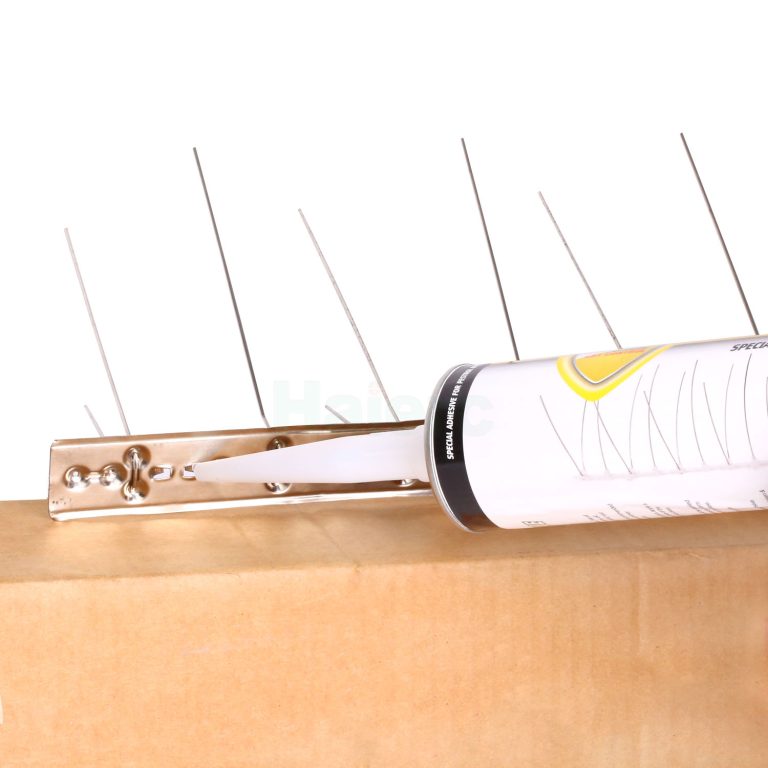
Never install hardware directly over raw bird droppings. Scrape and clean ledges using an approved biocidal wash to eliminate dangerous Cryptococcus and Chlamydia psittaci pathogens. Rinse the steel substrate thoroughly with isopropyl alcohol or industrial degreaser. Allow sixty minutes of drying time so hybrid polyurethane construction adhesives can cure correctly.
3. Structural Physical Barrier Installation
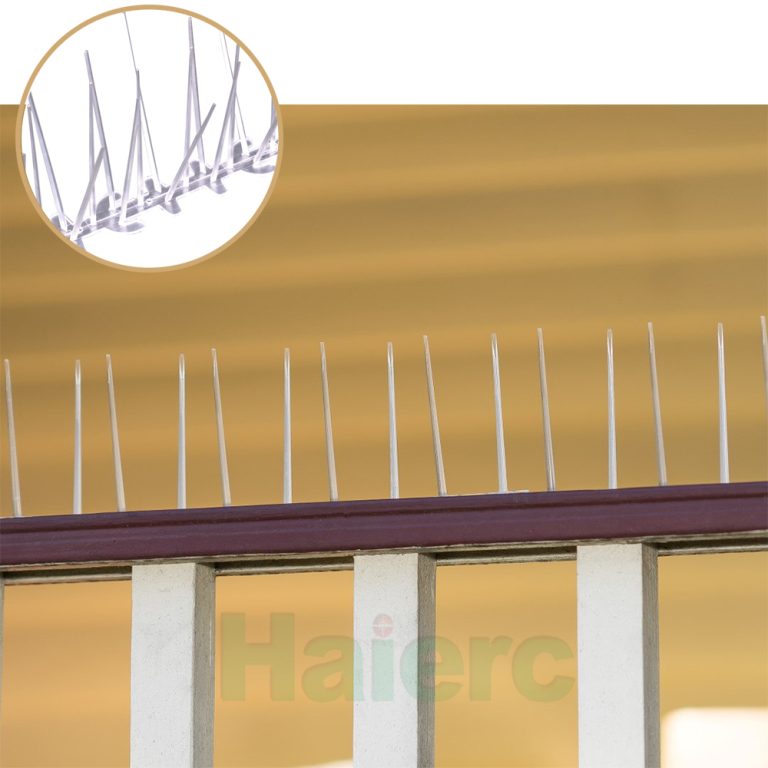
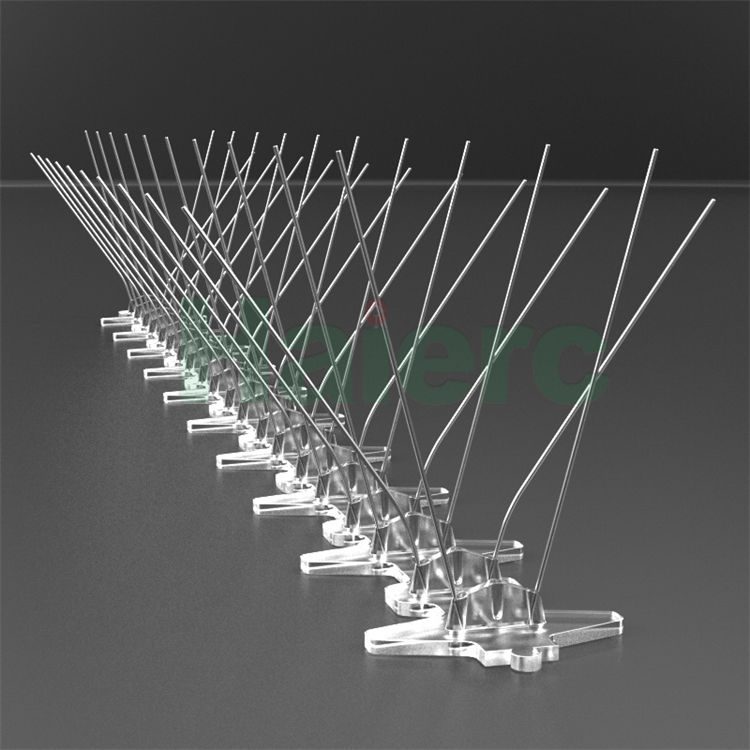
Position stainless steel pigeon spike EU importer grade hardware across every exposed external ledge. Run spikes completely to the outer edge of structural beams. Overlap the base plates by 5 mm to prevent small birds from squeezing between sections. Fasten polycarbonate bases with UV-stable MS polymer adhesive or screw-fix through pre-punched mounting holes on timber and composite surfaces.
CORRECT LEDGE COVERAGE (OVERHANG DEFENSE)
Spike Tip Overhang (10-15mm)
\ | /
\ | / [Bird Spike Assembly]
\ | /
═════[===]═════ < Polycarbonate Base Plate
┌─────────────┐
│ LEDGE EDGE │ < Structural Beam / Parapet
│ │
4. Dynamic Visual and Passive Deterrent Layering
Pair mechanical spikes with optical harassment tools along long roof ridgelines. String Bird Repellent Flash Tape across flat roofing expanses where crosswinds cause optical flicker. Suspend a dynamic Head Moveable Plastic Owl Bird Control unit near high open eaves where netting cannot be dropped due to gantry cranes. The erratic movement interrupts settled landing patterns before birds transition to lower purlins.
5. Ground-Level Perimeter Sealing
Install heavy-duty multi-catch traps and a robust Mini Plastic Mouse Tunnel network along internal dock walls. Place physical traps tight against skirting lines at 6-meter intervals. Maintain complete exclusion barriers by checking seals quarterly to stay compliant with IFS and ISO 22000 hardware requirements.
Product Selection for Demanding Food and Logistics Facilities
Selecting the right physical hardware prevents costly re-installations. High-salinity coastal air in ports like Felixstowe or Southampton corrodes cheap galvanized wire within eighteen months. For lasting proofing, professional operators specify premium 304 SS or 316 marine-grade wire pressed into virgin UV-stabilised polycarbonate bases.
Haierc Industrial Pest Hardware Specifications vs Industry Standard
| Specification / Feature | Haierc Standard Spec | Industry Average | Operational Advantage |
|---|---|---|---|
| Wire Composition | 304 / 316 Stainless Steel | Galvanised / 201 Steel | Resists acid rain and chemical sanitiser washes |
| Base Plate Material | 100% Virgin UV-Polycarbonate | Recycled Mixed Plastics | Zero thermal cracking across -40°C to +80°C |
| Base Flexibility & Break-points | Pre-notched every 50 mm | Rigid continuous strip | Tool-free sizing on curved architectural pipes |
| Wire Attachment Tensile Strength | Riveted micro-lock punch (>25 kg) | Friction glued / clipped | Wires stay aligned under heavy gull strikes |
| Factory Compliance | ISO9001, CE, REACH, RoHS | Uncertified workshops | Zero audit friction during BRCGS inspection |
For narrow ledges and pipe tracks, model HC1115-T12B provides an ultra-dense spread that stops both feral pigeons and collared doves. When dealing with wide masonry cornices, model HC2216 spans up to 200 mm wide per run. It provides reliable coverage across deep I-beam flanges without leaving unworked gaps.
+—————————————————————————————————+
| MODEL HC1115-T12B (Narrow Run) | MODEL HC2216 (Wide Flange / Cornice) |
| – Width: 50 mm to 100 mm | – Width: 120 mm to 200 mm |
| – Best for: Conduit lines, pipework, parapets | – Best for: Steel beams, wide masonry, HVAC |
| – Base: Virgin UV Polycarbonate | – Base: Virgin UV Polycarbonate |
+—————————————————————————————————+
Where visual presence helps break landing habits over broad yard areas, positioning a Scare Birds Plastic Owl Decoy or a Plastic Owl Decoy Scare Birds unit provides a secondary visual push. If facility teams manage multi-pest pressures across loading bays, pairing avian deterrents with a Heavy Duty Mouse Trap Poison Holder or a discreet cockroach sticky trap ensures total floor-to-rafter coverage. Global operations sourcing through a B2B export lead generation platform often look for a versatile anti bird spikes supplier capable of handling custom packaging and fast lead times. Whether your operations need a specialist Bird spike importer buyer USA specification or regional malla para aves importador container drops, hardware reliability dictates long-term performance.
Practical Field Mistakes to Avoid
Technicians often make the error of setting spikes back from the ledge edge. If a technician leaves a 50 mm gap between the outer masonry lip and the front row of spikes, pigeons will simply perch on that exposed ledge. Always position spikes so the outer wire tips overhang the building edge by 10 to 15 mm.
INCORRECT INSTALLATION (Ledge Gap Left) CORRECT INSTALLATION (Overhang Defense)
\ | / \ | /
═════[===]═════ ═════[===]═════
[GAP] ┌─────────────┐ ┌─────────────┐
(50mm)│ LEDGE EDGE │ │ LEDGE EDGE │
│ │ │ │
-
- Pigeons perch on front gap! * Landing completely blocked.
Another common oversight is deploying passive visual deterrents in static positions for months on end. Pigeons habituate quickly. If Bird Reflective Scare Tape or visual decoys stay in the exact same orientation without adjustment, birds recognise they present no actual danger. Rotate visual deterrent locations every two to three weeks.
Do not overlook adhesive selection. Standard silicone adhesives lose elasticity when exposed to British frost cycles. Use high-modulus MS polymer structural adhesives designed for exterior cold-weather curing. Skipping this causes full spike runs to detach under wind loads, leading to failed compliance reviews. Keep your ground defenses just as tidy. Ensure multi-catch units and mouse tunnels remain clear of warehouse dust so trip mechanisms trigger consistently.
Frequently Asked Questions
Q: Which bird spike base material performs best under damp UK weather conditions?
A: Virgin UV-stabilised polycarbonate bases combined with 304 or 316 stainless steel wires provide the longest service life. They withstand deep frost cycles, heavy UV exposure during summer, and acidic guano without cracking or rusting. Haierc spikes use engineered break points in the polycarbonate base, allowing technicians to curve strips along uneven masonry without snapping the base plate.
Q: How do stainless steel bird spikes satisfy BRCGS food safety audits?
A: BRCGS Section 4.14 mandates proactive, non-toxic physical exclusion over reactive chemical baiting. Humane stainless steel bird spikes prevent avian pest harborage on structural girders without generating toxic runoff or chemical contamination risks. Haierc hardware is fully compliant with REACH, RoHS, and CE standards, guaranteeing safe deployment in food logistics and processing sites.
Q: What is the ideal spacing when installing bird spikes on wide structural steel beams?
A: For wide structural I-beams, spike wire tips must extend all the way to both outside edges. If the beam flange exceeds 200 mm in width, install parallel rows of spikes with no more than 65 mm between the center bases. This prevents pigeons from finding an open walking track down the middle of the beam.
Q: Can visual deterrents like reflective scare tape replace physical bird spikes?
A: Reflective tape and visual decoys serve as complementary deterrents rather than standalone solutions. Bird Reflective Scare Tape uses sunlight flicker and wind motion to disturb flight paths across wide open yards, but physical bird spikes remain necessary on high-pressure roosting ledges where birds have established nesting habits.
Q: What minimum order quantity is required for custom OEM bird spike packaging?
A: Standard factory orders start at an accessible 500-unit MOQ for trial shipments. Custom private label retail cartons, modified spike density configurations, and OEM barcoding options are available for commercial pest control suppliers and regional distributors worldwide, with standard 15 to 25 day lead times from our Tianjin facility.
Summary & Next Steps
Securing large commercial logistics hubs against chronic bird and rodent pressure requires dependable hardware, proper ledge alignment, and strict adherence to non-toxic exclusion protocols. Relying on makeshift proofing leads to stock losses, sanitation closures, and expensive audit failures. By combining high-grade stainless steel physical barriers, durable polycarbonate bases, and dynamic visual harassment tools, facility managers can maintain an impenetrable perimeter year after year.
We have manufactured professional pest control hardware for more than 18 years, delivering certified bird spikes, trapping systems, and physical barriers from our ISO9001-certified factory in Tianjin to markets worldwide.
Request samples or wholesale pricing → contact our technical sales team at info@haierc.com or explore full hardware specifications directly at www.haierc.com.